The post Artist: Edward Burtynsky appeared first on MA Photographic Journey.
]]>The work he has produced over the decades resonates not only for the current project but passed as well. Some images such as the outflows or deltas lead to a very abstract image which is where Burtynsky aims his work, ‘I like it when the viewer can’t ‘get it’ instantly,” says Burtynsky, poring over one of his two-metre wide prints to find a clue that proves we are looking at a river delta, not just an abstract swirl of reds and browns.’ 1
The image from the open cast copper mine shows that scale that mining has been allowed to expand in some regions of the world. Other mining images such as the Iberia collection show a more humble mining operation. It has to be realised that even the most humble of operations still impact the planet.
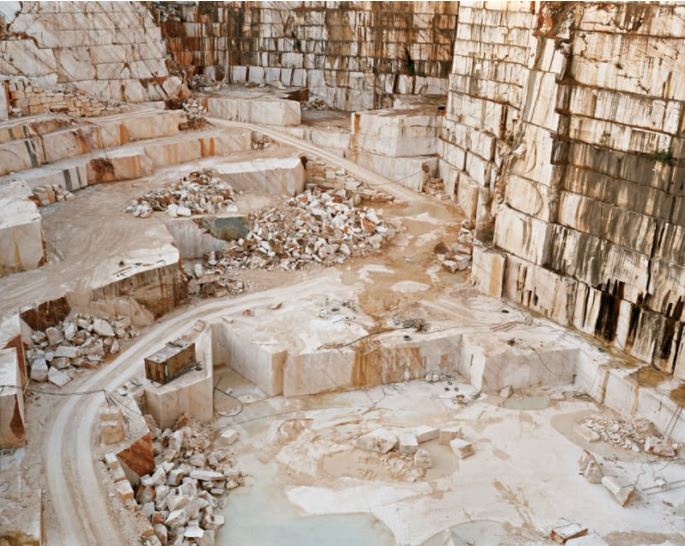
The image here entitled Iberia Quarries #4 Solubema Co Bencatel Portugal may be mistaken for a small mine but when you read the image you will see the road. At first, a road is just seen, but scaling the road against the large stone blocks and the size of a truck the true implications of the mine are realised.
This work ties well with my current project and the use of large-format, panoramic or aerial images is something to consider as the practice develops.
References
Figure 1 Edward Burtynsky Iberia Quarries #4 https://www.flowersgallery.com/artists/145-edward-burtynsky/
1 Oliver Wainwright https://www.theguardian.com/artanddesign/2016/sep/15/edward-burtynsky-photography-interview
The post Artist: Edward Burtynsky appeared first on MA Photographic Journey.
]]>The post Topic One: Redact a Magazine appeared first on MA Photographic Journey.
]]>Redacting the magazine is the easy part. In selecting I first chose the page with the children and the bears. Without the context have we now discovered giant children somewhere and have teddy bears finally arrived on our shores? Another part of the children’s image raises the question what are they looking at?
The second page I found interesting for the reason you can still understand what its about. A church on a route in the NW of Dorset.
The final selection was a page whose layout seemed to be repeating over and over in the magazine. I can not be sure if it is formula or lazy in the production
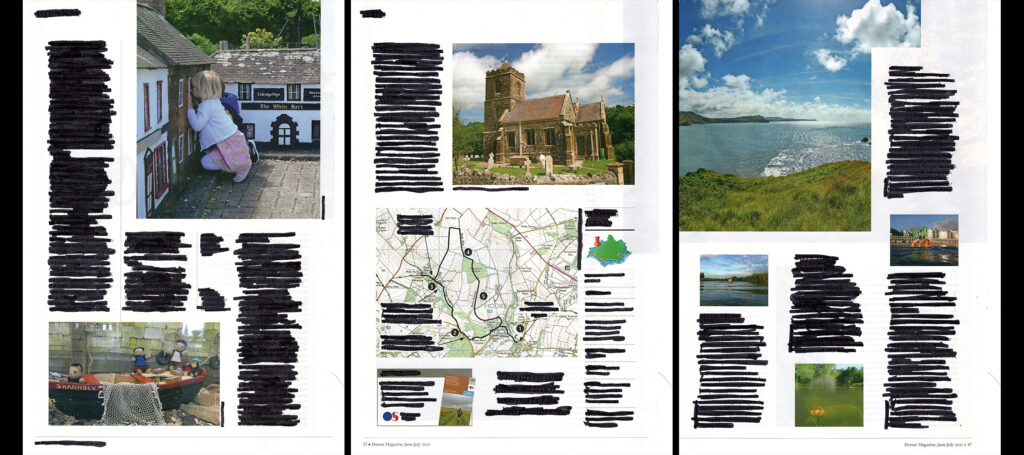
The first encounter with this task certainly made me wonder why. Having now completed the task it is clear that it causes one to take time to explore images and page layouts.
The post Topic One: Redact a Magazine appeared first on MA Photographic Journey.
]]>The post Week One: Oldest Photo Forum appeared first on MA Photographic Journey.
]]>I knew that I had images taken when I was eight, before the cloud and before the internet. The achieve process back then was take the print and stick it to a bit of card. Simple solution for and eight year old. I have stored the sheets of card in various locations over the years, none of them special. Maybe with hindsight I should have taken more care of them.
Technology has advanced and sharing images is something that everyone takes for granted every day. Quick snap with the mobile phone the off to the cloud to store and share on Instagram and Facebook.
Scanning the old image and transferring it to the computer is and easy task although takes a few more minutes that a phone capture. Out of Lightroom and away to the cloud.
Quality of the 1970’s print leaves a lot to be desired due to the fixed focus point and shoot Agfa 126 camera that I used but it invokes the memory of the time the image was taken. I remember taking it and the camera but when it was slips away from me. I have seen the image many times over the years but never thought about it. The re-visit to scan and upload and think about the memory has caused the image to be ‘looked’ at. The memory of the event has changed, been forgotten.
I have proof it happened but the facts of the event are being lost. Without documentation and context this image will slip into a wonder who they were? picture as Roland Barthes discusses in Camera Lucida. It already is.
I can date the image from elements within the image because I was there. External viewers may be able to date the image with the car in the background or the Raleigh Shopper bike against the wall, putting it in the ’70s. The location and other information will be lost as the image has no EXIF data, unlike many modern pictures.
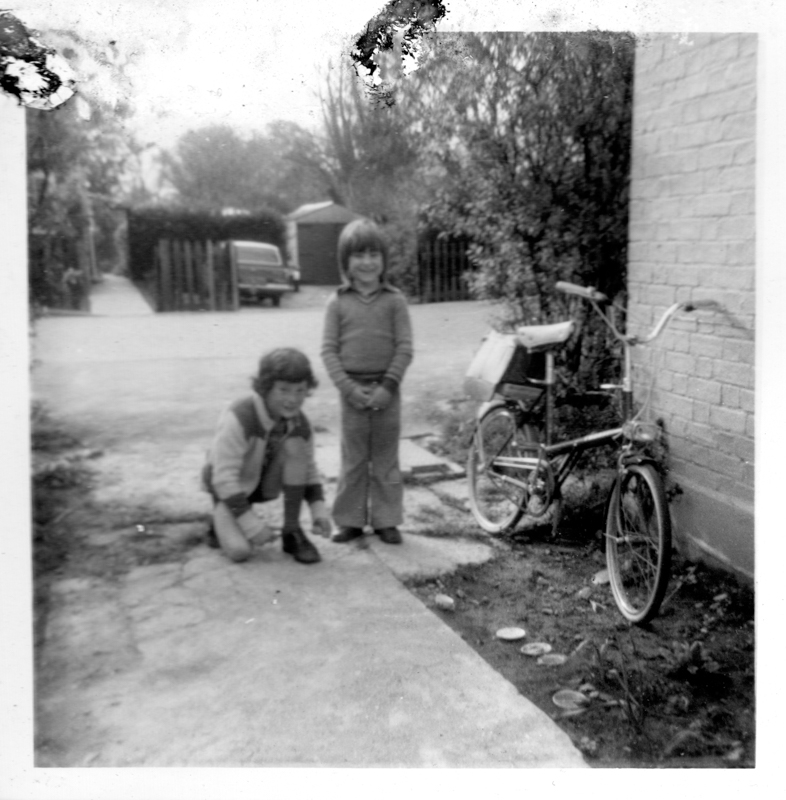
For the record It is Simon and James @ 34 Bar Lane, Stapleford. Early 1970’s
Time clearly changes memory of events and the image can only preserve what we can remember whilst leaving bread crumbs for the parts that are lost. So how true is history when individuals can’t remember events truly?
The post Week One: Oldest Photo Forum appeared first on MA Photographic Journey.
]]>