The post Artist: Andreas Feininger appeared first on MA Photographic Journey.
]]>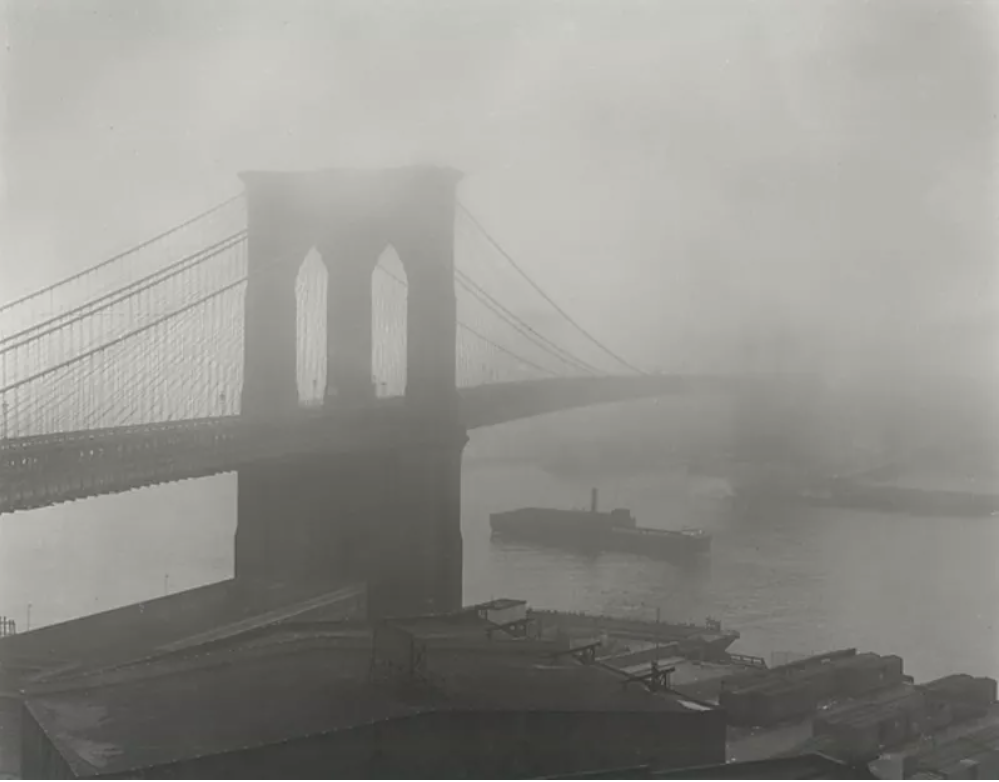
The above image shows how the scale of the bridge is emphasised by the boat going under the bridge. We all perceive the size of the boat which allow us to comprehend the bridge. Using a smaller focal length nearer to the bridge would distort and reduce the size and give a false perspective, however, that is possibly what we would more relate to with the more common focal lengths.
This principle is something that I feel is often overlooked, or often forgotten. I know that I am guilty of this. Remember all the features of the lens that you use.
Feininger’s principle lens, which he discusses, is 40″ which would work out just over 1000mm which is certainly not typical for landscape photography, Maybe more at home with wildlife or sports.
The landscape images stand out not because they are of new things or locations but because he has moved away repetitive images of things we have all seen.
Feininger also utilises the long focal lengths in the creation of more abstract art in the miniature utilising shells and other small objects, again showing that a long lens can be used for more than one application.
I take from this the reminder that we have the tools and remember to use them to their most.
Images
Figure 1 Andreas Feininger https://www.artsy.net/artwork/andreas-feininger-brooklyn-bridge-in-fog-1
The post Artist: Andreas Feininger appeared first on MA Photographic Journey.
]]>The post Artist: Anthony Karen appeared first on MA Photographic Journey.
]]>Anthony has a strong portfolio where a great deal of trust and acceptance has been gained to embed with the individuals in his project. I feel that many of the projects have boundaries that start to cross blending into more of a major project with chapters.
God’s country reminds me of Sally Manns work with her family however this work is harsh and abrupt.
At present, I don’t feel that this is work that can directly inform current work but I feel that the work stands strong enough to make notes for future reference.
The post Artist: Anthony Karen appeared first on MA Photographic Journey.
]]>The post Artist: Edward Burtynsky appeared first on MA Photographic Journey.
]]>The work he has produced over the decades resonates not only for the current project but passed as well. Some images such as the outflows or deltas lead to a very abstract image which is where Burtynsky aims his work, ‘I like it when the viewer can’t ‘get it’ instantly,” says Burtynsky, poring over one of his two-metre wide prints to find a clue that proves we are looking at a river delta, not just an abstract swirl of reds and browns.’ 1
The image from the open cast copper mine shows that scale that mining has been allowed to expand in some regions of the world. Other mining images such as the Iberia collection show a more humble mining operation. It has to be realised that even the most humble of operations still impact the planet.
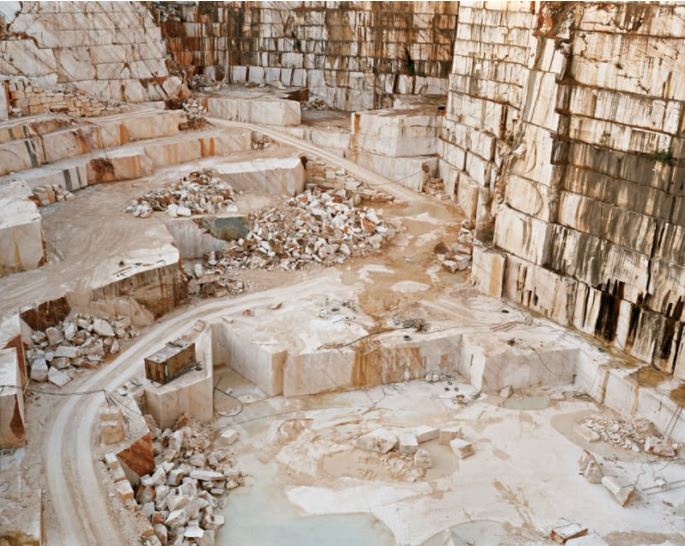
The image here entitled Iberia Quarries #4 Solubema Co Bencatel Portugal may be mistaken for a small mine but when you read the image you will see the road. At first, a road is just seen, but scaling the road against the large stone blocks and the size of a truck the true implications of the mine are realised.
This work ties well with my current project and the use of large-format, panoramic or aerial images is something to consider as the practice develops.
References
Figure 1 Edward Burtynsky Iberia Quarries #4 https://www.flowersgallery.com/artists/145-edward-burtynsky/
1 Oliver Wainwright https://www.theguardian.com/artanddesign/2016/sep/15/edward-burtynsky-photography-interview
The post Artist: Edward Burtynsky appeared first on MA Photographic Journey.
]]>The post Artist: Penelope Umbrico appeared first on MA Photographic Journey.
]]>Umbrico has not stopped with sunsets, utilising the process has created works based on full moon images and TV remotes. I find that the sunset images work well with the colours blending and contrasting. In looking at the image I find that it enters a “eye” game as you explore the surface moving along the lines before being stopped by a colder image which moves the eye in a different direction.

As abstraction I find this a great piece as although the image allows the individual referents to be seen clearly, however the overall work creates a new non referent image.
With the concept of appropriation in mind, I produced an image of the Eifel Tower with images found online. This image is produced in the multiple exposure method, as discussed in the post regarding Pep Ventosa. So

Reference
REXER, Lyle. 2013. The Edge of Vision. (First paperback edition edn). New York: aperture.
Figures
Fig 1 Suns from sunsets on Flikr http://www.penelopeumbrico.net/
Fig 2 Roydon Woodford 2021
The post Artist: Penelope Umbrico appeared first on MA Photographic Journey.
]]>