Starting informed contexts, looking at one’s own practice and then trying to put some context around it so that the work is informed, just as the starting point for the module. This takes a moment of stepping back to deeply reflect upon the current practice. Having spent time researching and reflecting there is much to be thought about with the regards to the progression of this practice.
Currently, my practice is based on the abstract art form. There is a large question ask. Is abstract photography art but that is not a question I intend to answer at this stage. This produces the largest problem may be a weakness within the practice in that there is no context per se apart from the production of images which are aesthetically pleasing the “Wall Art” the “Gallery Exhibition Art” but that has no meaning.
I could be pretentious and propose that the meanings are an exploration of some mental state feeling or position however I am having more trouble justifying this work outside the nice at this stage. With the project of “Abstract” it is nothing more than the experimental research stage of what images can be created, At present, the project feels more of a technical exercise in producing interesting, exquisite light paintings more than a project to highlight or identify.
There are many methods, forms, and types of abstract images. The art form has been around from the early days of photography although in 1960 the Museum of Modern Art, MOMA staged an exhibition, “Sense of Abstraction” featuring 300 photographs from 75 global practitioners which brought the genre into more mainstream. The comment ‘What is significant is the fresh surge of interest in using familiar tools of the photographic medium to produce works whose sole function is to delight – or affront – the eye.’1 from the MOMA guide to the exhibition shows the increase in acceptance.
If one does a search online, it can establish the types of images that are available. The theoretical aspect, books contain a small section on Abstract if at all The writers such as Barthes and Sontag do not dare to tread in the arena. With Barthes dismissal of double exposure ‘what have I to do with Atget’s old tree trunks, with Pierre Boucher’s nudes, with Germaine Krull’s double exposure’2 Through my work in progress, I have undertaken several genres of image-making and this process is producing wildly different types of images all under the heading or mantra of abstract work.
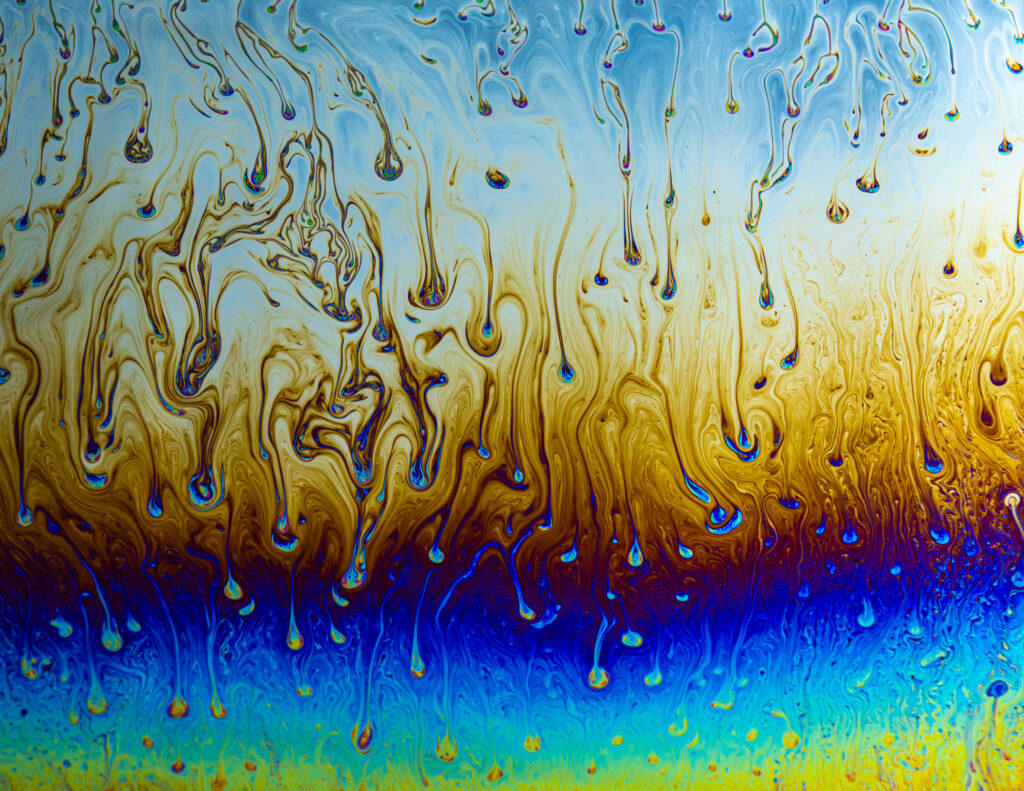
There are many established photographers who undertake abstract work but only a few who stay explicitly within the boundaries of abstract many practitioners have a series or have done an abstract project but this does not form the main corpus of their work.
One major notable exception is the practitioner Pep Ventosa whose collection of work stands out from many of the others. There are many images around where comments are aligned to “that reminds me of Pep Ventosas’ work”. I feel that the positioning of his practice gives validity to the ‘in camera movement’ style of images. These and in-camera multiple exposures’ are the poor man’s cousin to Ventosas’ work.
In the early areas of my project, I thought of using a carousel or fairground as part of an image. Having seen the incredible work of Pep Ventosa and with research, I do not believe that in my area and the current restrictions I could produce any work similar, however, I have explored the process with other objects.
I can resonate with Susan Derges, who produces camera-less images position where she describes the research and subject. ‘
‘I think contextual research is less connected with the demands of the
discipline and more driven by the nature of the subject. I am always led by the subject in terms of what needs to be done but then also I look at as much work as I can both in historic as well as contemporary contexts.‘3
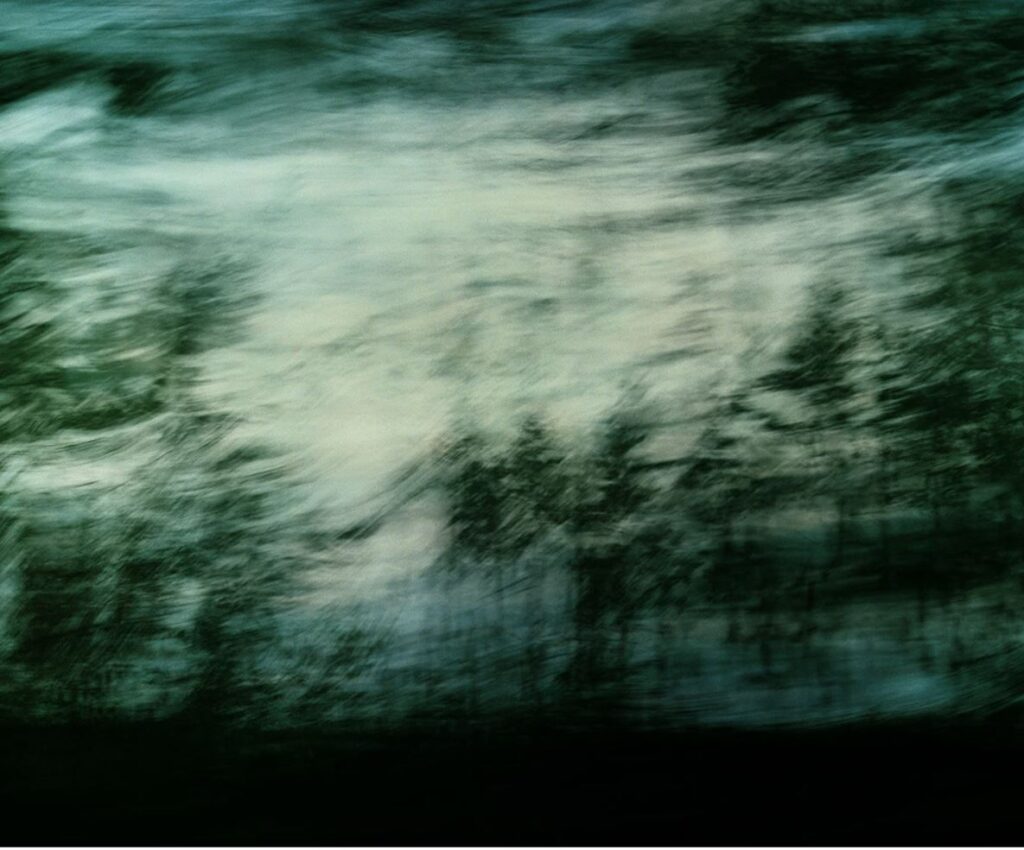
Ori Gersht is a good example of a practitioner who has an extensive portfolio which has significant abstract work. The work within the liquidation series based in the forests in the southwest region of Ukraine shows an aesthetic to the horrors that unfolded within the lives of the people in the area. The ICM technique is a simple process. When successful produces moving images which can really push the message forward.
Paul Gravett is a practitioner who works light in a magical way. Exploring what he can create. Creating art with no back storey. His work influences in a way that he has undertaken research to produce stunning images that I can technically read to utilise in my own work,

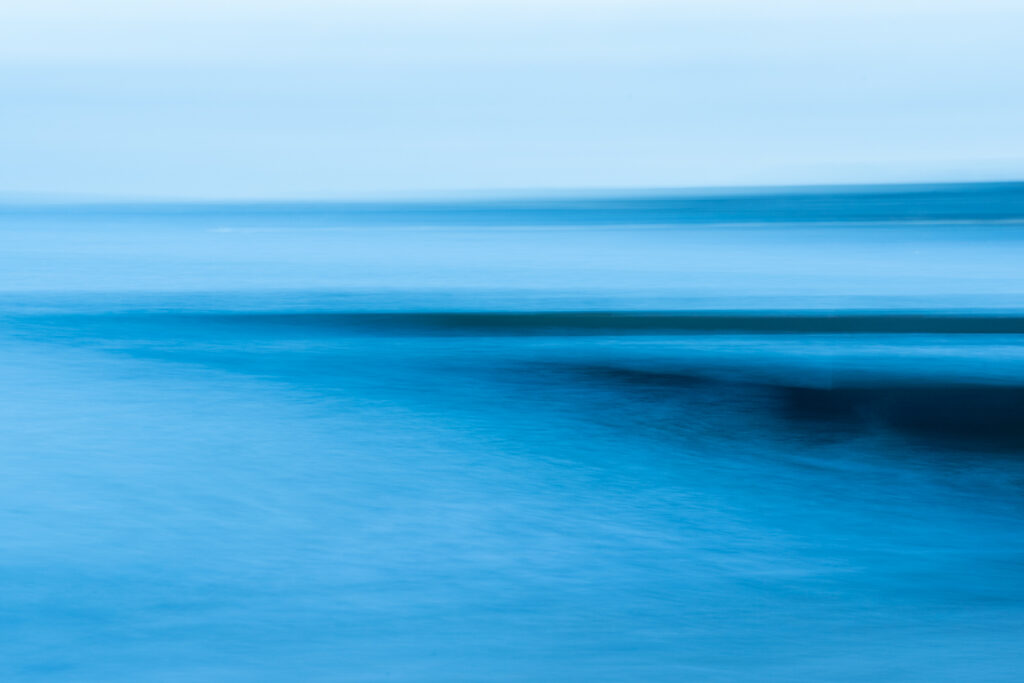
With all the images in the gallery as “wall art,” I feel that the contextualisation of this practice will be extremely difficult. Finding theoretical documents and writings that explore abstract photography as art is limited.
There is much more to do in the creation of images during this next stage of the course. One of the areas that I will be focusing on is “light painting”. This method will allow more controlled creativity which will reflect human choice in a much greater way.
Bibliography
1 MoMA. The Sense of Abstraction, 1960
2 BARTHES, Roland. 2000. Camera Lucida. London: Vintage.
3 Youtube,com Interview / Exhibition Pep Ventosa
4 READ, Shirley and Mike SIMMONS. 2017. Photographers and Research. Oxford: Routledge.
Figures
Fig 1 Roydon Woodford
Fig 2 Ori Gersht: Galician (Part of Liquidation Series) https://www.origersht.com/copy-of-time-after-time-2006-m
Fig 3 Paul Gravett Memento: Haida Gwaii 2 (https://paulgravettphotography.com/abstracts)
Fig 4 Roydon Woodford


