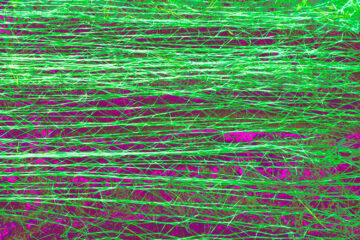
There has been much thought along with this abstract progression and finding context. Many have suggested that follow the art history trail. Surrealism and abstract expressionism both leap out as possible avenues of interest however, sadly at this stage I feel that neither fit the bill to inform the practice.
Within my research, I am exploring many avenues and at present feel that one context for the work is hedonism. I feel that many I have spoken too about this idea instantly go ‘what’s sex got to do with it’?
In fact, the association with sex possibly comes from the well know party resort venues. If you explore the word in more detail it is discussed in many great philosophers writings. Democritus (c460 – c370) is an example of just one philosopher to discuss a hedonistic philosophy; he called the supreme goal of life “contentment” or “cheerfulness,” 1
Wikipedia describes the root of the word as
‘The term hedonism derives from the Greek hēdonismos (ἡδονισμός, ‘delight’; from ἡδονή, hēdonē, ‘pleasure’), which is a cognate from Proto-Indo-European swéh₂dus through Ancient Greek hēdús (ἡδύς, ‘sweet’) + suffix -ismos (-ισμός, ‘ism‘). and is derived from the Greek word’2
From the writings and the origin of the word, we can see that the hedonistic theory is aiming for pleasure. Pleasure can be found in many forms, looking out at a sunset or as Srdjan Jovanovich states,
‘Art, thus, is a form that can be understood and taken in as sometimes purely hedonistic, as the subject derives sheer pleasure from the perception of the piece of art in front of him. Hedonistic abstract art is precisely that type of art where nothing needs to be understood, it only has to be felt. ‘3
I feel that this sort of approach may offer some position for abstract art however I do not feel it is simply the answer but opens an avenue to further explore.
Bibliography
1 DK 68 B 188, cited in: Taylor, C. C. W. 2005. “Democritus.” in Greek and Roman Political Thought, edited by C. Rowe & M. Schofield. Cambridge. p. 125
2 https://en.wikipedia.org/wiki/Hedonism
3 https://rupkatha.com/hedonisminabstractart.php
Reference