Yes we drowning in a sea of images. The mass production of images around us begin to become noise. I feel it can be viewed as chip paper. Today’s news is tomorrows chip paper, although red tape ruined that one. The images fly past on the Facebook or the Instagram feed, soon to be replaced by yet more. Its for this reason one needs to have some method of stopping ones own images disappearing down the stream in the fast flowing current. All the methods we discuss, printed portfolio, zine, gallery or book are ways of creating separation and stopping the loss of images into the sea of images.
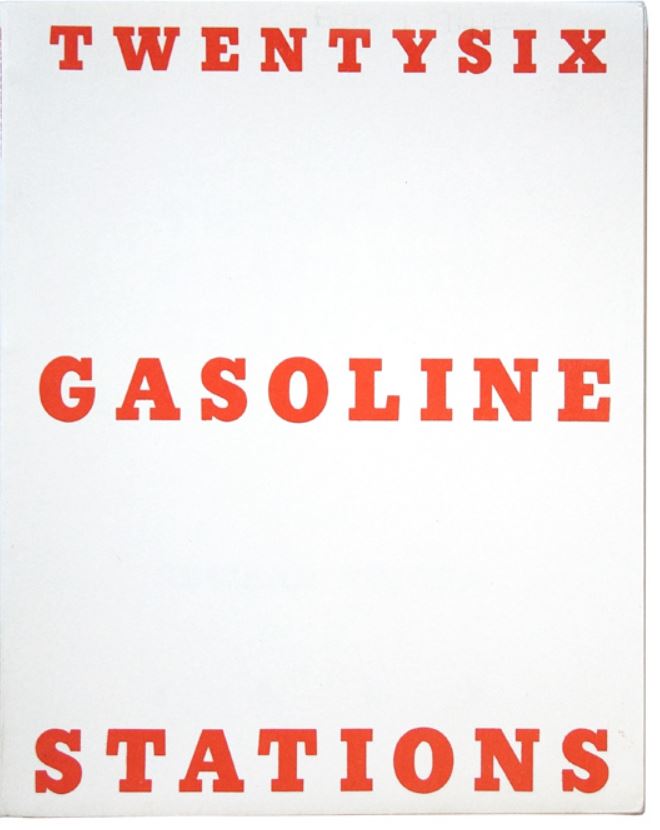
By curating images into a finished product sets them aside from just random images. Here, a small booklet produced by Edward Ruscha. He produced this and sold them personally. The images would probably not exist today if they had not been taken out of the flow and presented in this way.
Modern production methods allow for much more professional results which can be sold or displayed online. The book or printed portfolio tend to provide a much greater permanence to a collection of images over a typical gallery exhibition.
Starting out with the gallery route for exhibiting images it is unlikely that it would be a solo exhibition. This factor would need careful consideration as other practitioners work or standing may have a direct influence on the context of one’s own work. For my own practice placing work in with aother abstract work will provide a sensible option. An example would be an exhibition such as the one curated by Lyle Rexer, The Edge of Vision. The works displayed provided a variation of styles and processes so that any viewer that may be left cold by one image could find great delight in another.
Figures
Fig 1. Edward Ruscha https://en.wikipedia.org/wiki/Twentysix_Gasoline_Stations


