The post Virtual Gallery Exhibition Opens appeared first on MA Photographic Journey.
]]>https://artspaces.kunstmatrix.com/en/exhibition/5892354/edge-of-something
The work in progress portfolio is due. Second module WIP progress can be found at roydonwoodford.co.uk however the link above displays the work in a more natural galley setting.
The post Virtual Gallery Exhibition Opens appeared first on MA Photographic Journey.
]]>The post Week Ten: Work In Progress appeared first on MA Photographic Journey.
]]>This is a blending of the abstract work and exploration of images with a topical subject. This direction came about when I started exploring the abstract processing on more normal images. I felt that this was a major success in that it highlights a social problem that we are all facing, that of pollution in our oceans.
A beer bottle on a shoreline may not be seen but make it purple to highlight it, a sauce bottle oozing red.
This body of work has been well received by the public through social channels and has opened up avenues to explore for exhibiting them and continuing this as a further project.
I have further experimented with this avenue having collected shoreline plastics and pollution to bring home to utilise macro photography. I feel that macro photography lends itself to this process both in abstraction and the pollution aspect with the microplastic and small items. I have yet to explore the macro in pure abstract but think that it will provide some very clear results.
At this stage, I feel that I will include some of the images in the final work in progress presentation, however, it may be a distraction from the exploration of the abstract. With some weeks still to go before that has to be finalised things may change. I do not think the clipper lighter is too successful as the actual lighter is lost in the sea of red. The red only works on select images. I find the drum of carbon remover is a great piece and I could see that displayed in a book or exhibition with the safety sheet next to it to show how toxic this drum is.
The post Week Ten: Work In Progress appeared first on MA Photographic Journey.
]]>The post Multiple Exposure as Abstract appeared first on MA Photographic Journey.
]]>The image below is a bandstand photographed in a circle around it. The resultant image is a stack that is blended into one. This image means that you see the whole of the bandstand at once. Although it retains the image that we are familiar with its an image that can never be seen in reality. Other aspects that come into play is that spurious parts in the background blend and are lost.
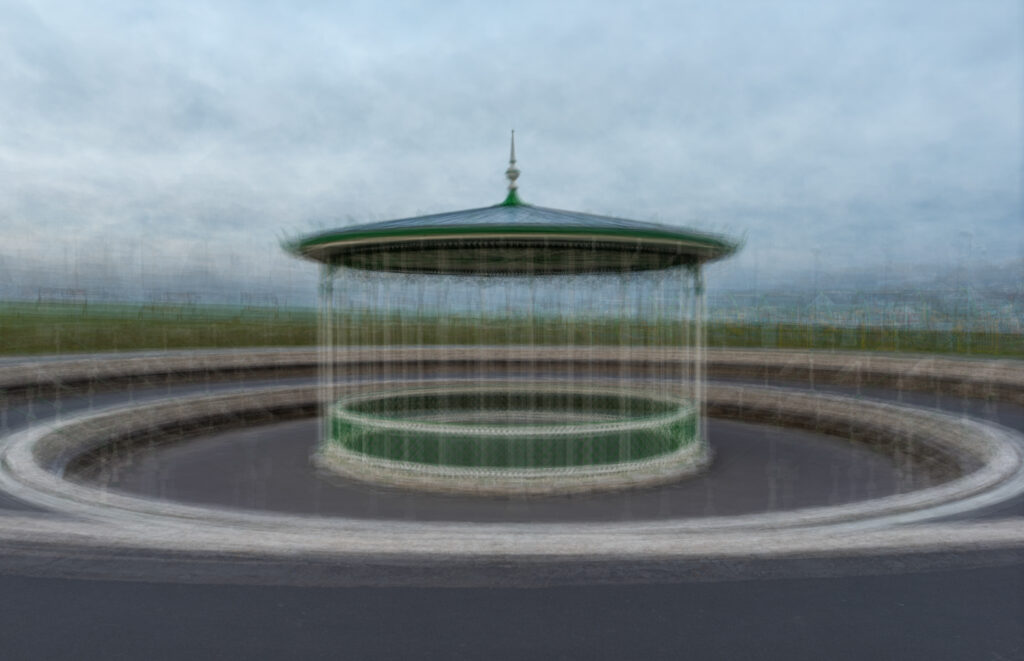
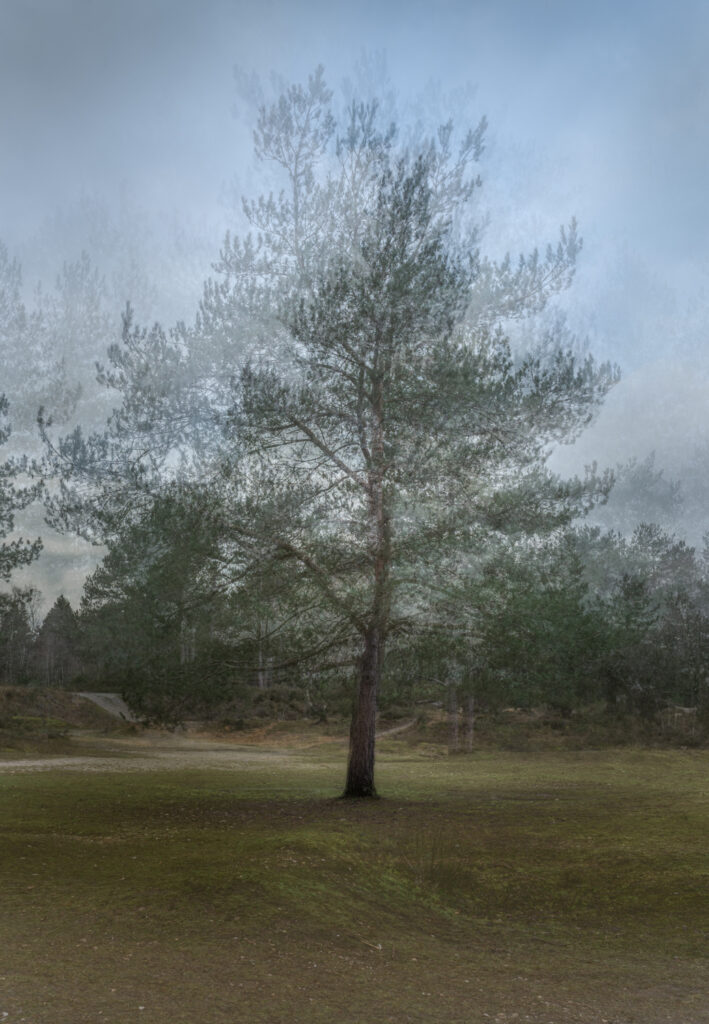
The process of multiple exposures used in both these images is utilising a full 360o image capture. I have experimented with a smaller angle where access does not permit the 360o and although it can be equally successful I feel that these two are the best I have produces so far.
One review commented on the colour palette, Which sadly can’t be helped with a green bandstand or tree. However, I do understand that this style is often used in street scenes where there can be a lot of vibrant colours. So if you compare on aesthetics they would always be better.
I will progress this further at some point, although it is producing abstract images I am not sure that this is a form of abstraction that I have been looking for as the images are too ‘real’ and clearly is a work in progress with only two images to include.
To take this multiple exposure further I feel that I would have to start travelling to find locations where more colour can be introduced. With the current pandemic restrictions, this has not been possible but maybe in the near future, it will be.
There are several notable artists who work with multiple exposures such as Corinne Vionnet and Pep Ventosa (further details).
As experimentation, I have used the method with the appropriation of images to create new work. Lockdown Travels via Pinterest.

The post Multiple Exposure as Abstract appeared first on MA Photographic Journey.
]]>The post Soap Bubble Photography appeared first on MA Photographic Journey.
]]>To be able to explore what soap bubble photography could offer I had to devise a method to create a stable ‘bubble’. Running around with a camera trying to capture a soap bubble before it bursts would not be the most ideal method to capture the colours. The method would also have to take into account the ability to light the surface in a controlled way because the colours are derived by the reflection of light on differing thicknesses of soap film. As an example, the golden yellow is thinner than the blue.
I had initially explored creating a frame with plastic tubes or straws. I found that all stocks had dried up after the ban on the sale of plastic straws. The idea of disposable pens glued together was the first idea I tried. The results provided a framed sheet of bubble mixture so the concept worked. To improve the setup I recreated it in waxed paper straws with the addition of extra beams to support the frame so that it did not need to be held.
Lighting from above with the camera in front proved successful for getting images.
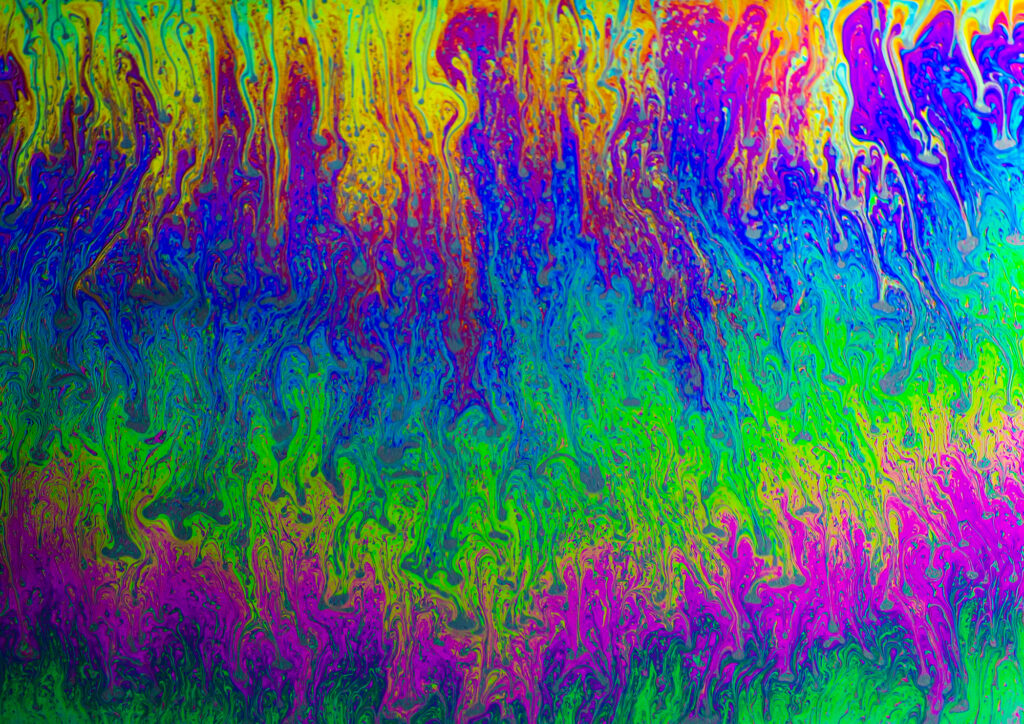
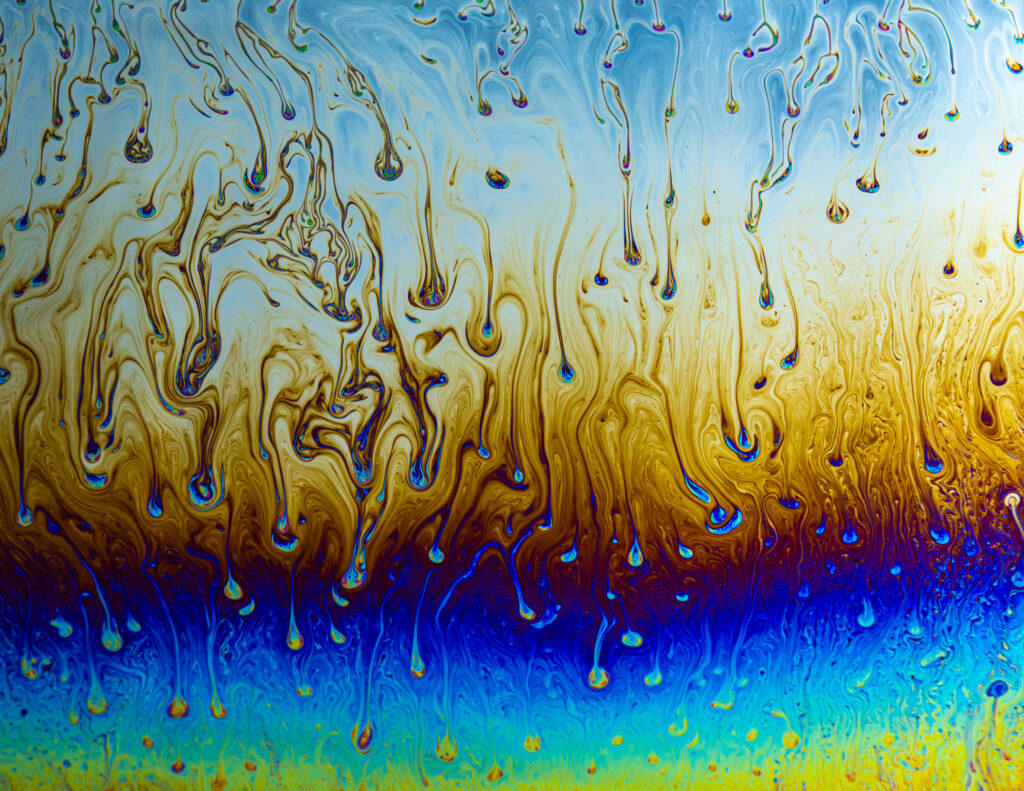
This produced some images that I was exceptionally pleased with, but it transpired that the method produced repetitive images. All very similar to each other. Gravity pulls the soap film down the constructed frame, and it is the relative thickness of the film where the colour comes from. After 100’s of images all similar, I abandoned the process for the time being. It will never create a collection of images with any real variation.
Other aspects that I am acutely aware of is that I am working on a flat plane. A soap bubble has a curved surface. This curvature would help improve variation to the images. Also working in close proximity to the sheet of the film provides a limited depth of field.
The post Soap Bubble Photography appeared first on MA Photographic Journey.
]]>The post Week Eight: Work In Progress appeared first on MA Photographic Journey.
]]>The post Week Eight: Work In Progress appeared first on MA Photographic Journey.
]]>The post Portfolio Review: Josh Lustig appeared first on MA Photographic Journey.
]]>The post Portfolio Review: Josh Lustig appeared first on MA Photographic Journey.
]]>The post Man Ray Solarization Investigation (Sabattier Effect) appeared first on MA Photographic Journey.
]]>Both Dada and Surrealism are considered the for-runners to abstract. I feel that it is important to understand these workings to contextualise my own work.

Fig 1 Man Ray Solarised Nude 1930
From 1923 onwards Man Ray produced what he called solarized images. Originally they came about through darkroom accident by Man Ray and Lee Miller although Man Ray is noted for perfecting the process.1 This work was not a one-off event as he continued to use the process through the years on many images, especially nudes. The process changes the image creating highlights around the figure, whilst changing the contrast. In many of the images, radiance glows from the figure.
The effect Man Ray utilised is now a well-documented darkroom process so I started out with the idea to explore if it was possible to create the effect in a “digital darkroom” or more commonly known as Photoshop.
As yet I have not created the desired effect with my images. I have evolved a process that with the right image delivers diverse abstract images that are well received. This has lead to my creation of Photoshop Presets that deliver consistent results.
Fig 2 – 4 Roydon Woodford
This work developed further with the understanding of what image I needed to create to get the desired results. The following images are selected for presentation and feel that they will become part of the final work in progress.
Fig 5 – 6
I have more investigation to develop the look that replicates the Man Ray process in a digital way however I feel that I have now another tool in the toolbox to use to narrate image.
Figures
Fig 1 Man Ray Solarised Nude 1930 https://www.manraytrust.com
Fig 2 – 6 Roydon Woodford
Bibliography
1 https://www.tate.org.uk/art/art-terms/s/solarisation
The post Man Ray Solarization Investigation (Sabattier Effect) appeared first on MA Photographic Journey.
]]>The post Beer Can Pinhole Photography appeared first on MA Photographic Journey.
]]>
Successful failure.
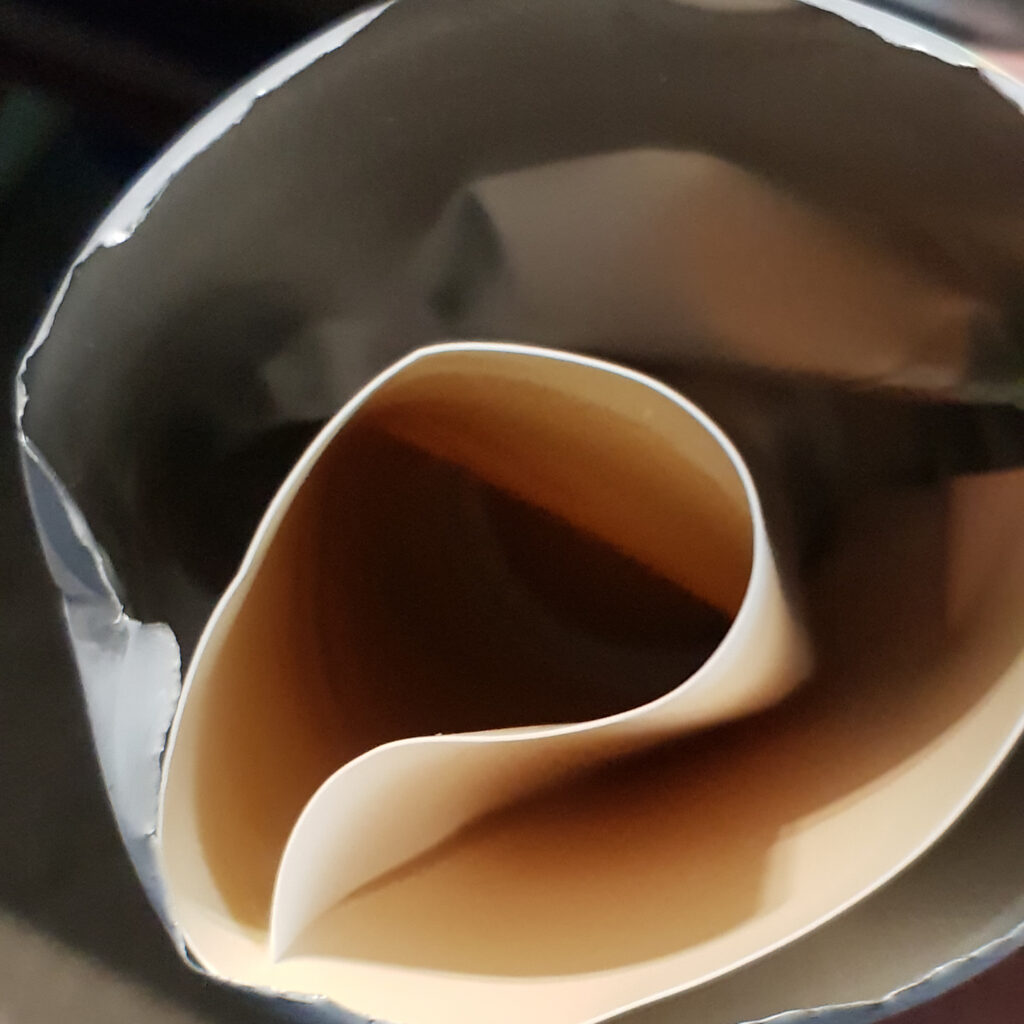
One area of investigation has led me to explore the practice of beer can pinhole photography. I have placed “beer can” cameras out in the local area. With the size of the aperture, the exposure time becomes months. One of my cameras had been in the field for 12 weeks on the seafront and weathered a couple of storms. Angled to capture the bay and the arc of the sun. Although the can was destroyed to my surprise I still managed to produce an exceptional image
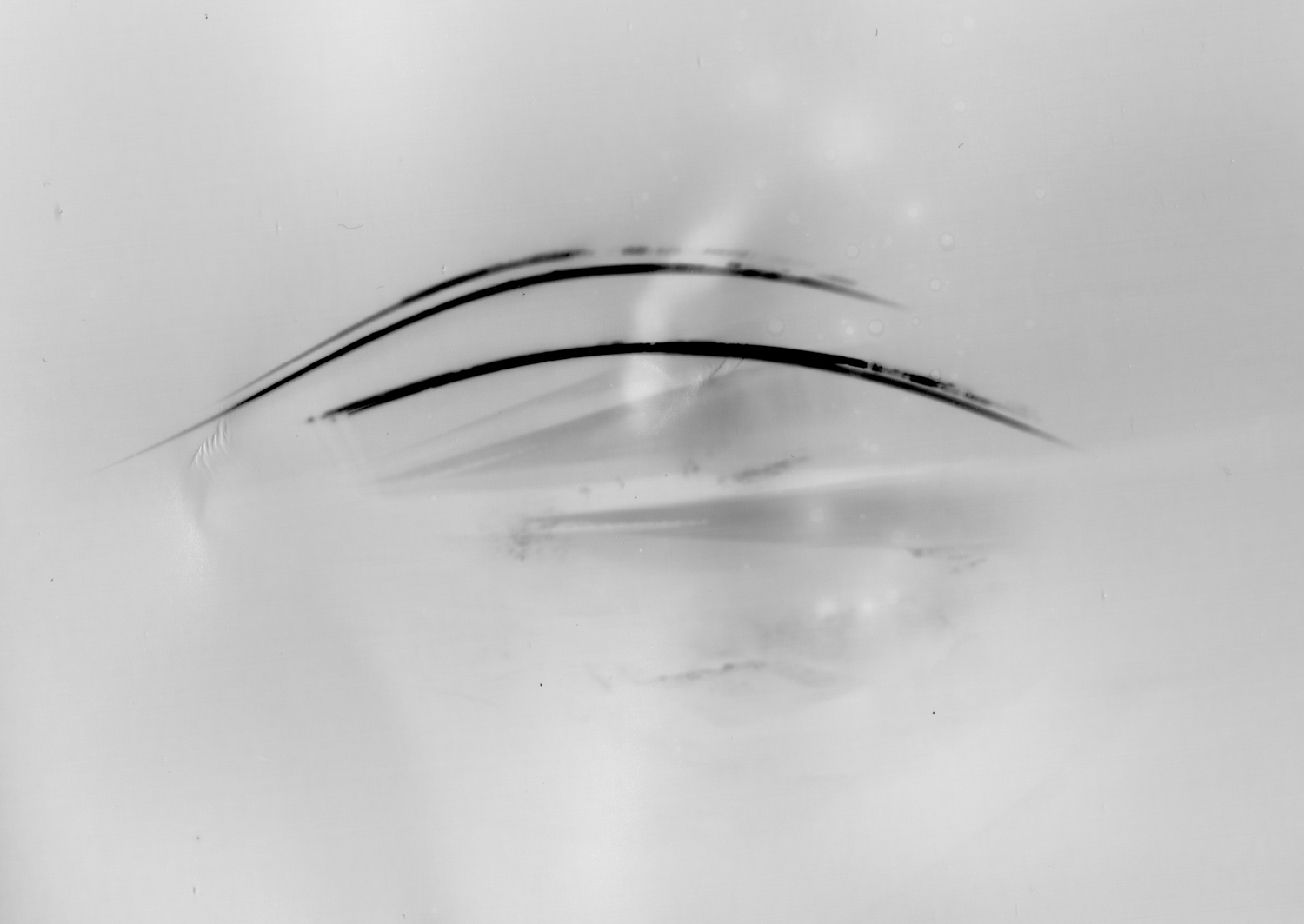
I feel the image is a success for a couple of reasons. The work is very abstract which fits into the body of work that I am working on at the same time clearly has elements of ICM (in camera movement).
This image is the first success of a process that is fairly high risk. With the use of a beer can there is little cost involved, so when they go missing for whatever reason its no great expense, just the loss of what could have been. Another risk is the location and the can being destroyed by the environment. More cans will be deployed to continue the beer can pinhole photography project.
A fellow photographer filmed the area and caught a clip of it surviving the storm. https://twitter.com/Lyonsphotos_uk/status/1335156938565447685?s=20
The post Beer Can Pinhole Photography appeared first on MA Photographic Journey.
]]>