The post PHO702 Critical Review of Practice appeared first on MA Photographic Journey.
]]>The culmination of the PHO702 Informing Contexts module. The assignment to produce a 2000 word Critical Review of Practice, better known as CRoP. Follow the link to view the final version as submitted. The work in progress for this module is located at http://roydonwoodford.co.uk
The post PHO702 Critical Review of Practice appeared first on MA Photographic Journey.
]]>The post Artist: Penelope Umbrico appeared first on MA Photographic Journey.
]]>Umbrico has not stopped with sunsets, utilising the process has created works based on full moon images and TV remotes. I find that the sunset images work well with the colours blending and contrasting. In looking at the image I find that it enters a “eye” game as you explore the surface moving along the lines before being stopped by a colder image which moves the eye in a different direction.

As abstraction I find this a great piece as although the image allows the individual referents to be seen clearly, however the overall work creates a new non referent image.
With the concept of appropriation in mind, I produced an image of the Eifel Tower with images found online. This image is produced in the multiple exposure method, as discussed in the post regarding Pep Ventosa. So

Reference
REXER, Lyle. 2013. The Edge of Vision. (First paperback edition edn). New York: aperture.
Figures
Fig 1 Suns from sunsets on Flikr http://www.penelopeumbrico.net/
Fig 2 Roydon Woodford 2021
The post Artist: Penelope Umbrico appeared first on MA Photographic Journey.
]]>The post Artist: Roger Newton appeared first on MA Photographic Journey.
]]>
Roger Newton pushes back against the traditional photographic systems to explore the ‘looking’ and expand the question of representation. His work, an abstractness that pulls against the composition that leaves the viewer to make sense.
The properties of the components he uses have dramatic affect on the images directly. Non glass lenses made of oil or homemade film emulsion glued onto plywood. This photographer is a good example of the experimentation that abstract photographer can utilise to produce images.
This process would be further research to conduct in the abstract process. I do have reservations for my own practice as the simple chemistry is predominantly black and white which I have not explored in any great detail.
References
https://www.davidzwirner.com/exhibitions/1996/roger-newton/press-release
Figures
Roger Neton: https://www.invaluable.com/auction-lot/roger-newton-1721-c-fe74dcd8c9
The post Artist: Roger Newton appeared first on MA Photographic Journey.
]]>The post Virtual Gallery Exhibition Opens appeared first on MA Photographic Journey.
]]>https://artspaces.kunstmatrix.com/en/exhibition/5892354/edge-of-something
The work in progress portfolio is due. Second module WIP progress can be found at roydonwoodford.co.uk however the link above displays the work in a more natural galley setting.
The post Virtual Gallery Exhibition Opens appeared first on MA Photographic Journey.
]]>The post Intentional Camera Movement (ICM) appeared first on MA Photographic Journey.
]]>This method when not understood can resemble camera shake, or people say that the camera shake was intentional and I feel this results in images which do not do justice to the technique.
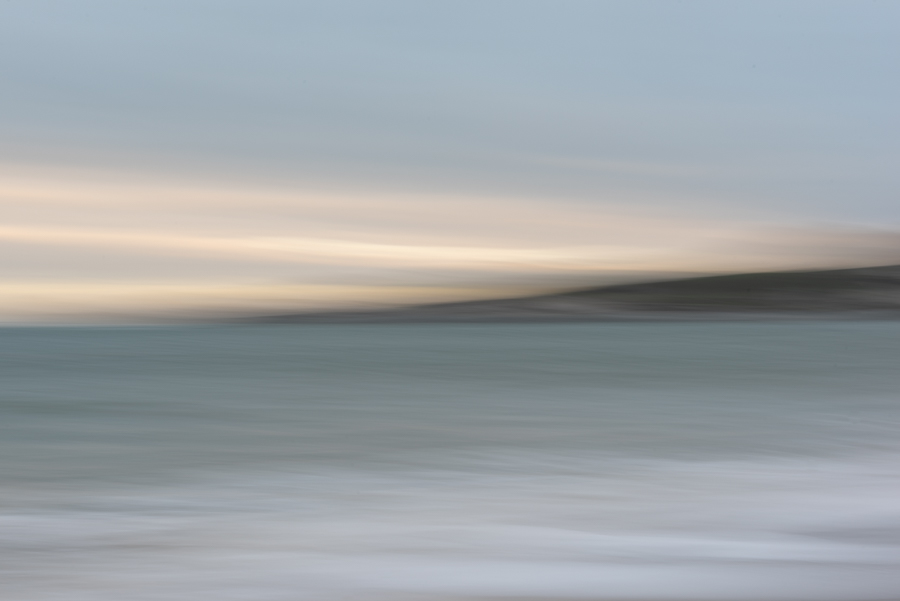
The image above is a beach scene and the intentional movement in this image is the camera panning right to left on a long exposure. This is a simple example of the technique. The ICM does include the multiple exposure work as the camera is moved intentionally although not during exposure.
The selection of images above are final works produced using the ICM technique. The images are produced with several different techniques all where the camera is moving.
This project work will continue and be developed over time as it has great potential. I have yet to bring in dusk and dark making use of lighting, which I feel could produce excellent results.
There are many practitioners in this area and casting an eye over the magazine that is dedicated to the process you will be able to see other good works.
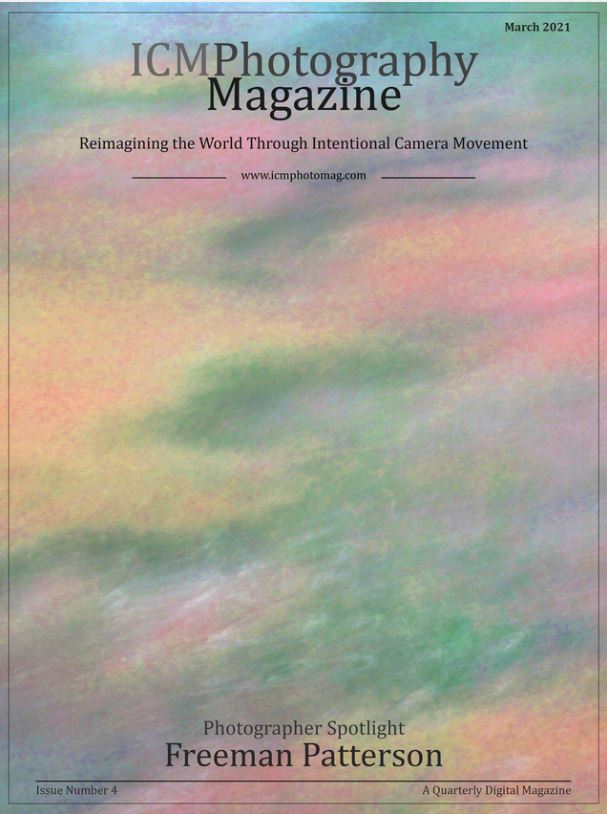
The post Intentional Camera Movement (ICM) appeared first on MA Photographic Journey.
]]>The post Week Ten: Work In Progress appeared first on MA Photographic Journey.
]]>This is a blending of the abstract work and exploration of images with a topical subject. This direction came about when I started exploring the abstract processing on more normal images. I felt that this was a major success in that it highlights a social problem that we are all facing, that of pollution in our oceans.
A beer bottle on a shoreline may not be seen but make it purple to highlight it, a sauce bottle oozing red.
This body of work has been well received by the public through social channels and has opened up avenues to explore for exhibiting them and continuing this as a further project.
I have further experimented with this avenue having collected shoreline plastics and pollution to bring home to utilise macro photography. I feel that macro photography lends itself to this process both in abstraction and the pollution aspect with the microplastic and small items. I have yet to explore the macro in pure abstract but think that it will provide some very clear results.
At this stage, I feel that I will include some of the images in the final work in progress presentation, however, it may be a distraction from the exploration of the abstract. With some weeks still to go before that has to be finalised things may change. I do not think the clipper lighter is too successful as the actual lighter is lost in the sea of red. The red only works on select images. I find the drum of carbon remover is a great piece and I could see that displayed in a book or exhibition with the safety sheet next to it to show how toxic this drum is.
The post Week Ten: Work In Progress appeared first on MA Photographic Journey.
]]>The post Quick Thought: Intent (Week 10 Seminar) appeared first on MA Photographic Journey.
]]>I feel that the current intent is misunderstood and could not be delivered as an elevator pitch unless there are 75 floors.
So the post started. Informing Contexts session on Monday proved to be worthwhile and so on topic. The session was devoted to Intent, with each attendee reading out their current position on intent. The elevator pitch live. The critique and direction for others helped me understand what needed to be done. From the verbose descriptive statement that I had, I was able to create a better version to read out. The criticism directed me further to see what was needed.
Several revisions later I have reduced my statement of intent I am sure that this will change again however, its a step in the right direction:
‘My work is the exploration of abstract photography to counter a view that photographs have to be of reality and the nature of what an image is. I have the chance to play in my mind as a creative with no boundaries, with no limits apart from light. Bright colours, startling colours, things that are unnoticed until transformed. In my practice I am happy to use all that the photographic medium can offer to capture light, to create something that can be seen in a new way.’
Clearing out the descriptive ‘what is’ and removing surplus ‘waffle’ reduced things down for a clearer statement. I feel it has moved forwards and I am happier with its progression.
The post Quick Thought: Intent (Week 10 Seminar) appeared first on MA Photographic Journey.
]]>The post Artist: Wolfgang Tillmans appeared first on MA Photographic Journey.
]]>I find that Tillmans is an exceptional artist of our times, his work spans many disciplines, not just abstract. From a Turner prize winner, book writing and numerous exhibitions under his belt it is the abstract work that was the first reason for my encounter with him, however, there is much more to explore with the body of work he has produced over the years.
For me one of the most dramatic series that has been produced is the ‘blushes’. These are similar to the one depicted below.

These images are created with “brushes” on photographic paper. The brushes are actually lights such as torches and lasers. I find this work an amazing blend of the arts. Leaping into the camera-less photography in a form of painting.
Looking back to the initial quote I can resonate with its contents looking at this work, and then the same position for much of my work. The image is where the abstract leads to and it is not about what it is or how it’s made.
For me this image is an excellent example of abstract work, even with its monochromatic style. The crisp smooth lines flowing into clusters and blurs. This effect is very reminiscent of the work by Jackson Pollock.
To explore other work by Wolfgang Tillman visit https://tillmans.co.uk/
References
Figure 1 Wolfgang Tillmans Swimming to Freedom https://www.artandsciencejournal.com/post/21145270586/wolfgang-tillmans-in-this-series-swimming?route=%2Fpost%2F%3Aid%2F%3Asummary
Further Interview with Wolfgang Tillmans
The post Artist: Wolfgang Tillmans appeared first on MA Photographic Journey.
]]>The post Multiple Exposure as Abstract appeared first on MA Photographic Journey.
]]>The image below is a bandstand photographed in a circle around it. The resultant image is a stack that is blended into one. This image means that you see the whole of the bandstand at once. Although it retains the image that we are familiar with its an image that can never be seen in reality. Other aspects that come into play is that spurious parts in the background blend and are lost.
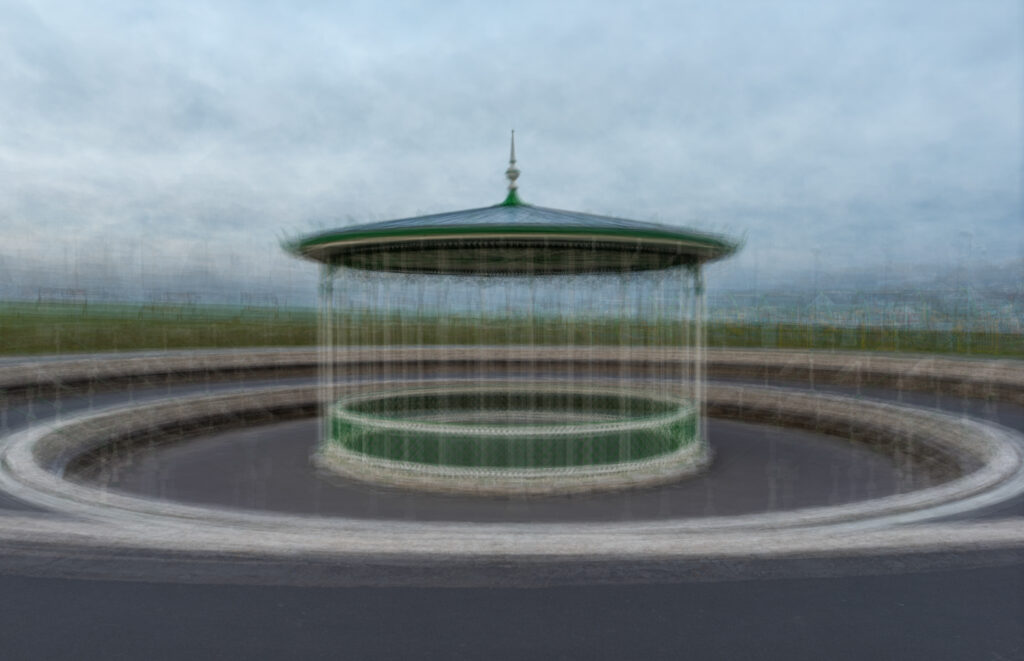
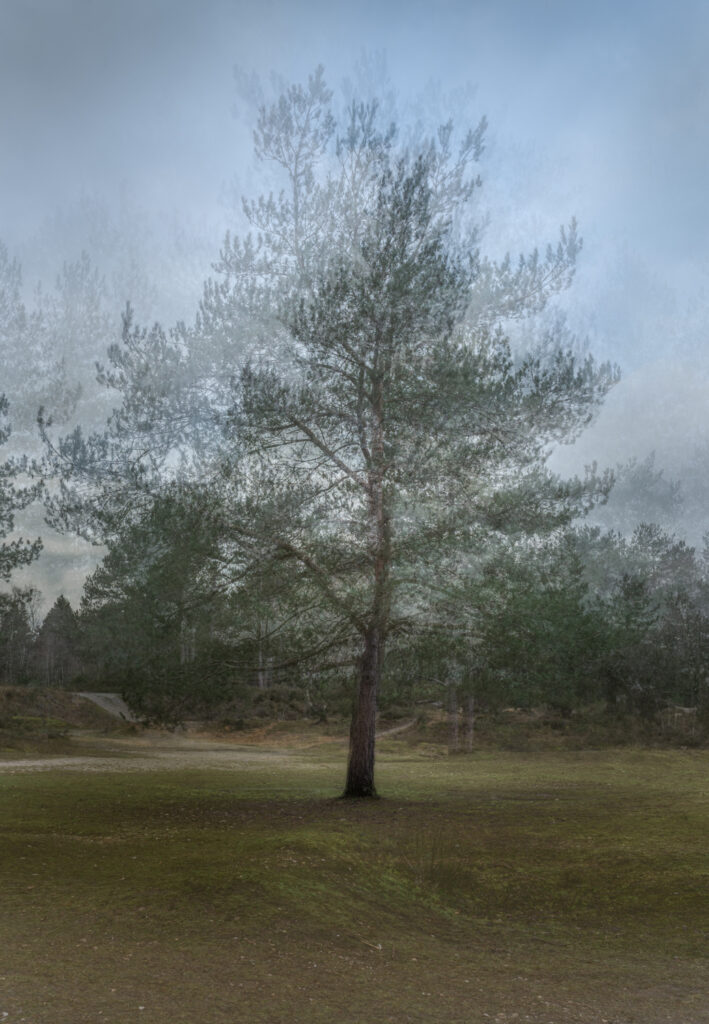
The process of multiple exposures used in both these images is utilising a full 360o image capture. I have experimented with a smaller angle where access does not permit the 360o and although it can be equally successful I feel that these two are the best I have produces so far.
One review commented on the colour palette, Which sadly can’t be helped with a green bandstand or tree. However, I do understand that this style is often used in street scenes where there can be a lot of vibrant colours. So if you compare on aesthetics they would always be better.
I will progress this further at some point, although it is producing abstract images I am not sure that this is a form of abstraction that I have been looking for as the images are too ‘real’ and clearly is a work in progress with only two images to include.
To take this multiple exposure further I feel that I would have to start travelling to find locations where more colour can be introduced. With the current pandemic restrictions, this has not been possible but maybe in the near future, it will be.
There are several notable artists who work with multiple exposures such as Corinne Vionnet and Pep Ventosa (further details).
As experimentation, I have used the method with the appropriation of images to create new work. Lockdown Travels via Pinterest.
The post Multiple Exposure as Abstract appeared first on MA Photographic Journey.
]]>The post Soap Bubble Photography appeared first on MA Photographic Journey.
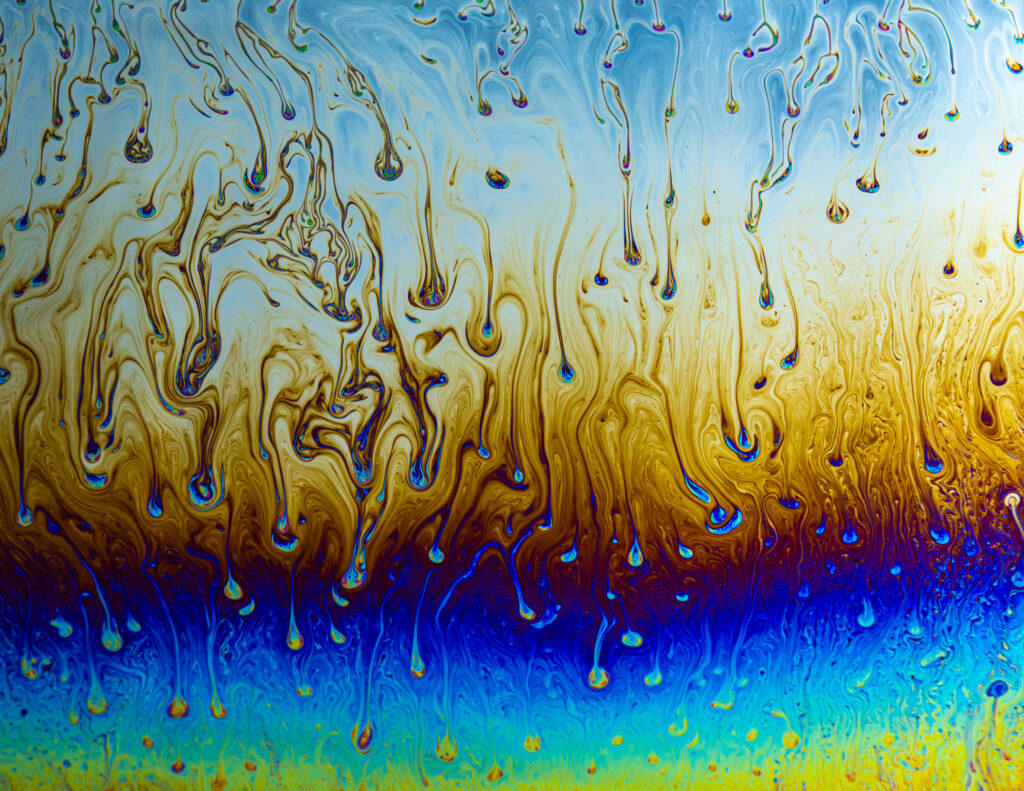
]]>To be able to explore what soap bubble photography could offer I had to devise a method to create a stable ‘bubble’. Running around with a camera trying to capture a soap bubble before it bursts would not be the most ideal method to capture the colours. The method would also have to take into account the ability to light the surface in a controlled way because the colours are derived by the reflection of light on differing thicknesses of soap film. As an example, the golden yellow is thinner than the blue.
I had initially explored creating a frame with plastic tubes or straws. I found that all stocks had dried up after the ban on the sale of plastic straws. The idea of disposable pens glued together was the first idea I tried. The results provided a framed sheet of bubble mixture so the concept worked. To improve the setup I recreated it in waxed paper straws with the addition of extra beams to support the frame so that it did not need to be held.
Lighting from above with the camera in front proved successful for getting images.
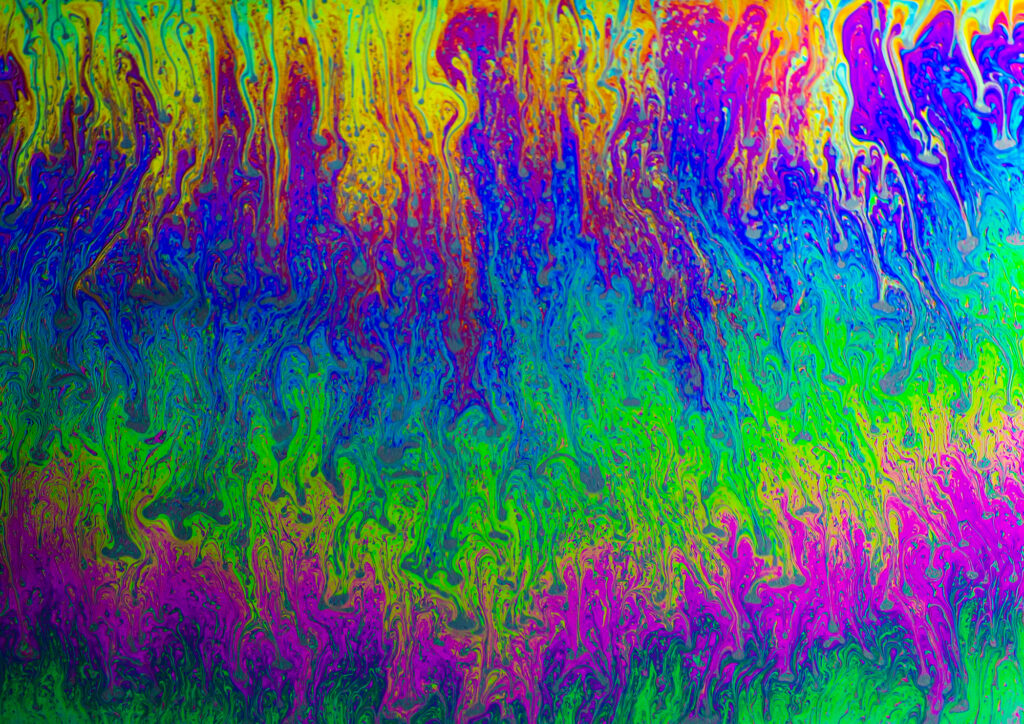
This produced some images that I was exceptionally pleased with, but it transpired that the method produced repetitive images. All very similar to each other. Gravity pulls the soap film down the constructed frame, and it is the relative thickness of the film where the colour comes from. After 100’s of images all similar, I abandoned the process for the time being. It will never create a collection of images with any real variation.
Other aspects that I am acutely aware of is that I am working on a flat plane. A soap bubble has a curved surface. This curvature would help improve variation to the images. Also working in close proximity to the sheet of the film provides a limited depth of field.
The post Soap Bubble Photography appeared first on MA Photographic Journey.
]]>