Nathan Jurgenson promotes an interesting discourse within his book about how the social photograph has exerted its presence on our life. However, it felt to me that at times it was a very random and disjointed ramble.
I walk away from the book feeling that it aspired to be something that it was not. The social photograph is ubiquitous and so often skipped or avoided in many of the writings that we absorb. Citations to other works are displayed throughout in an attempt to invoke the more academic narrative but never joining the dots as to why they were included or support his thesis.
Jurgenson touches briefly on many aspects of the social photo from the history of applications such as Hipstamatic, the concept that social photography is a cyborg practice, man and machine in “real life“. The documentary evidence that the social photograph provides is an area that I can relate to. I post to document for myself, often as a private post but if I find it truly different or unusual, I may share. With the documentation as discussed maybe that brings us back to the early travel photographer who consumed all images.
Maybe with my personal situation and understanding of the social photograph as well as age sets me on the outside looking in. I accept that this is a consumer product to entertain the masses and for the corporate world to make profits. It has pit-falls and risks, again touched on in the book yet they are never explored in depth. I have access to but seldom use, unless as a tool where I do not require my personal life and images to be shared. This position could explain why others who engage extensively with the social media platforms may well feel aspects of the book are thought-provoking.
With the self-identity aspect discussed, is that nothing more than the assumption of Barthes mask.2?
As I ramble in a disjointed way it’s clear that the social photo has become a social way of communicating, the art of literacy, as past, for now, mass communication is dumbed down to banal pictures to span the global family.
Question: As a way of perception and context. Was this book conceived and written as part of SNAP inc employment as implied in reviews?2 Are they aware of this and how does that align with the corporate position?
Having spent more time digesting the book and further research the information to the previous question has been answered. This leaves a hole of what question one could ask.
With further reflection and the discourse of the weekly seminar, I feel that there is a disconnect between the older and younger members of the group. The individuals that utilise social media regularly and the ones that restrain. Some with a view that the social photo has become the way we see every picture pre taken, ready for social media.
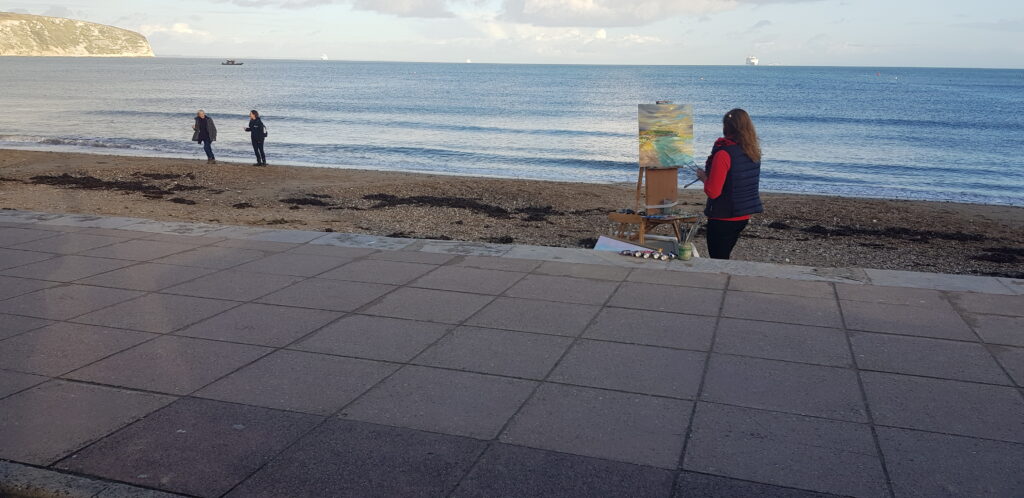
I seldom do a selfie let alone publish it. This image is a variation on the theme of the selfie. I took the image for me, selfish, not to share but for my memory and documentation. I have no need for the approval of others for posting some banal image, and I class an image of myself in this. I can not perceive that this image is an object or anything more than a snapshot. Aide memoir. What am I trying to convey with this image? Look at me. The pointing finger of Barthes. I am at the seaside in December, my life must be good? Does it portray that I am waiting for a hearse of a funeral procession?
Bibliography
1 Barthes, Roland. 2000. Camera Lucida. London: Vintage.
2 Leah Ollman, https://www.latimes.com/entertainment-arts/books/story/2019-08-09/review-selfies-social-photo-nathan-jurgenson Accessed 20/01/2021
Fig 1 Roydon Woodford


0 Comments