The post Week Eight: Practitioners Context and Gallery Creation. appeared first on MA Photographic Journey.
]]>Practitioners may choose a delivery method to contextualise their work as we have seen with the ‘kitchen’2 being used as a pop-up gallery. For the assignments of work in progress, options are more limited to online gallery or PDF.
Having spent time researching galleries and other practitioners I feel that most of the images are displayed grouped horizontally for example Stephanie Jung or in block arrangements but always bold and uncluttered. No fancy backgrounds.
Extensive exploration of various options for gallery production. Portfoliobox, Adobe to name but two. Adobe although free as part of the subscription is very tied and limited with what you can do but on a plus side image transfer to the Adobe platform is a simple process from Lightroom.
Portfoliobox, a competitive alternative to Wix and many others offers a range of set galleries which is worrying that it leads to a lot of the same for the viewer.
In conclusion, the best option would be to utilise a WordPress site where I have full control. Simple installation and away we go. This option allows for changes and modification to whatever I feel I need.
Good progress within the cohort regarding feedback. The group in a whole is starting to give constructive feedback to one another. No longer just commenting “I like your pictures” but offering options to possibly improve what is being displayed. Through the discussion groups and webinars, I personally felt happier offering advice but also pleased with the advice I received. Creating more space around my images, as suggested improved the overall aesthetics. This then allowed for a fine border and shadow to individualise each image. Clearly, the gallery is much improved because of the discourse during the week.
Biblography
- COTTON, C., 2009. The photograph as contemporary art. New ed. edn. London: Thames & Hudson.
2. OBRIST, H.U., 2014. Ways of curating. First American ed. edn. New York: Faber & Faber.
The post Week Eight: Practitioners Context and Gallery Creation. appeared first on MA Photographic Journey.
]]>The post Week Seven: Peer Commissioned Micro Project appeared first on MA Photographic Journey.
]]>Stage one of the exercise was to create a brief for a peer while they create one in return. The brief required restrictions based on the weeks’ discussions. Partnered with Steve Rabone we engaged to discuss what was possible with outside commitments. I would be working at the lifeboat station for the following days and with that in mind Steve put forward a brief to photograph behind the scenes. As part of my brief to Steve, I had asked for 7 images so to level the field he asked for the same.
[foogallery id=”228″]
I felt that I would attempt a series of selfies of the work that I undertook at the station.
At the start I had no pre-ideas about the output of the images however in post black and white pulled the images together as a collection or series. To undertake this style of work I would prefer not to use myself as the limitations of using a remote and limited position a tripod could be used.
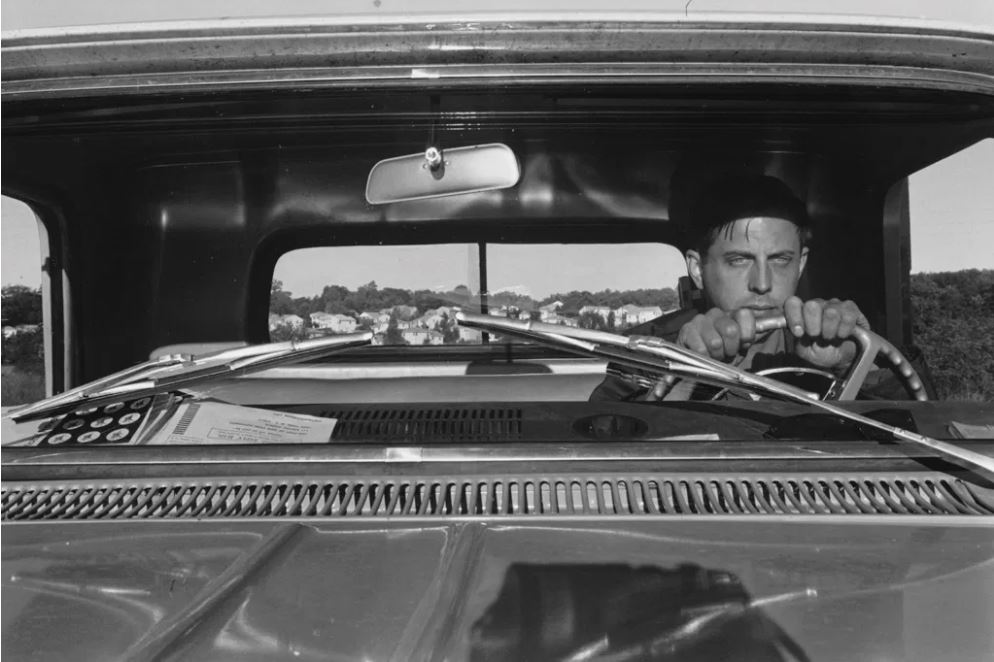
I find the results resonate with the work of Lee Friedlander in his series of self portraits with a direct comparison to the 1966 print titled Haverstraw, NY which depicts Friedlander at the wheel of a car. His work in the series expands away from the simple self portrait utilising shadows and reflections to create a more diverse body of work than I produced.
Robert Mapplethorpe is another example of a practitioner that I feel has adopted the use of self-portraits to create a series with a sense of style and fun early on, the later longer exposure, showing signs of confusion in old age. I can see that the technique can be effective in the creation of images and without the constraints of the location of the brief I may well investigate this further in the future.
The post Week Seven: Peer Commissioned Micro Project appeared first on MA Photographic Journey.
]]>The post Week Six: Chance appeared first on MA Photographic Journey.
]]>Modern technology allows a myriad of shots to be captured within one second. So are these photographers relying on the chance or luck presented? with the rapid-fire of the modern DSLR, 6-12 frames per second, the shot before the buffer is full and then miss the next?
I have the feeling that these photographers are doing just that using the luck and chance just to get the next shot. If it was technical only one camera would need to be present. This shows that in any practice there has to be chance or luck, The luck is maybe which side of the field you’re at and the chance is you started depleting your buffer at the right moment.
With the abstract practice that I am currently working on, I have to accept that there are times when luck can have a helping hand as I clearly feel others have the same luck. Often one can have the visualisation of the image you want to achieve, but, Unless external factors fall into place the practitioner may not ever get the image.
Baldessari takes chance almost as his brief. The ‘Car colour series’ I feel is inspirational use of chance. Taking images down one side of the street of the parked cars. In itself, this series would not stand out as anything more than colour cards. It’s in the installation for viewing the series that brings it together as art, with spaces left where no car was parked is the significant factor that makes the series work. This is certainly an aspect to remember in that it may not be the one image that is the work but all the images, A reminder of Jeff Wall’s work using many images to create one picture.
The post Week Six: Chance appeared first on MA Photographic Journey.
]]>The post Week Five: Power and Responsibility appeared first on MA Photographic Journey.
]]>Looking at my own practice in reference to the ethical position I felt that there was limited ethics involved. Based heavily on landscape and seascape unless you look at the image production aspect. This raised comments from others fronting that there could be a lot more to consider. I can agree that there are areas where landscape images can be used for interpretation by third parties, the example presented to me “the ramblers association vs the NFU, something that one shot could provoke a reaction from a contentious issue over access.”, However, my practice has not been placed in the position of an image being requested for reproduction so personally, it is not relevant as a consideration. In the event of such a request then clearly the ethical considerations would have to be evaluated based on the request.
One aspect that I had not perceived to think about that was raised was the impact that photographers can have on the environment. Not being one to damage the environment I have often been dismayed by the damage visiting photographers make in our area. Poppy season the farmer’s fields trampled, Bluebell season woodland area destroyed. This opens a whole new way of experiencing the ethical debate, it’s not about the image and what happens to it. A good example is Fay Goodwin’s approach to landscape photography looking at human interaction and not chasing the picturesque image.
Our first forum discussion regarding the image produced by Jeff Mitchell, depicting refugees, secured for adverting by UKIP in the Brexit referendum. This strong image and discussion based on the Guardians article created very similar avenues of discussion. The photographers’ ambivalence to finding out how his image had been used, or how he was wrong to have passed it up for publication so that UKIP could acquire the rights.
My position stood with the others and could see that he had made the choice to pass it to a large agency for sale so had responsibility. The point that he was a staff photographer and had been sent by the agency was missed by many. I feel that in light of this the position changes dramatically.
Maybe it’s more black and white than many believe, Staff for a large agency – paid, sent places, win awards, make a name or, Worry about ethics and don’t take the shot or publish. If you have the ethics that you need to talk to people, be involved with the people, have a concern for their needs or desires then maybe you would never put yourself in the position to take the picture. To move forward, as a practitioner, you work with people and get involved and create documentary images, they are great and then Getty sees your work, offer you a position would you sell your soul and throw out your responsibility? or does your ethical responsibility dictate what or how you can photograph?
Image production comes with great power as we have seen in examples such as Alan Kurdi, the small child drowned on a beach in Greece. This image used to manipulate the public view of the refugee situation. This power brings responsibility. In considering the responsibility, ethical practices have to be reviewed. Any ethical position needs to be based on all the information available and could have an impact, what is happening, what’s going to happen, What could happen. The ethics of any situation are subjective if no law has been violated.
The peer review of the oral presentation created what I felt was a low point. All the people that had seen the various revision had all been too supportive so criticism was hard however I knew that it needed work. The webinar, the brutality that I had been looking for. Within a short space of time, the low was reversed to a positive. A comment made about the sequence of the presentation I had already been thinking so was not a problem. Needing further criticality was a suggestion by both Paul, the tutor and others. Now a reworked presentation that I am very much happier with.
I have seen the development of myself far greater through the process of each version, than any other part of written work so far and I now feel I could do with another week or two to create the best version. Version? I do not know how many different versions I have made but each one better than the last. Peer review is such a powerful tool. This highlighted in the people I shared with early were not empowered to advise.
Submission in a few days, Fingers crossed.
Set reading resource always brings something new. This week no different. Practices of Looking; an application of visual culture (Spectatorship Power & Knowledge) by Sturken, Marita and Cartwright, Lisa is an introduction to further reading. The first impression of spectatorship would have to be looking. The analysis involved with the looking is compelling to dig further into the psychoanalysis touched upon within the chapter. Utilising the Hitchcock film the rear window, already mentioned in Week Three: Rethinking Photographers, the authors can introduce a new aspect of the meaning of the presentation of the film. The voyeuristic nature of the film highlights the controlling male’s gaze, which I feel Tania Modleski argues successfully is emasculated by his confined state.
The post Week Five: Power and Responsibility appeared first on MA Photographic Journey.
]]>The post Week Four: Collaboration appeared first on MA Photographic Journey.
]]>What would be learnt this week? Well if nothing else it would have to be how to work with others would be my position however, that would be way to simplistic an out come.
How do we collaborate? Where do we start? were defiantly first thoughts but fortunately, the weeks’ structure gave a simple lead into starting the collaboration, and now with reflection of the weeks’ materials, discussions and activity I realise these have been answered along with a whole lot more creating a solid grounding for future collaboration.
With a forum filling up with prospective mini projects to choose from it felt that we were under starters orders and the mad race to find a dance partner had begun. I felt that there were clear winners for me to choose and some none starters as well. Each prospective partner had presented an image to reflect what they like or had interest in. When do you select the right one? The pace of the new offerings seamed to be a crawl, waiting to see what the next hour brought while risking a group being formed around a project you were interested in.
Too long.
The first person I approached had a group, he had joined in on another’s idea. Another image, another possible group. Forming a group on Canvas, headway was being made.
The who, what, when, where and how was soon put in place with good communication through the forum. I feel the collaboration task would have been a lot harder without the forum, which enabled the group to distribute information outside of timezones and schedules and any late joiners get up to speed as and when they could.
Our project started with the premise of showing the change in the local area. I felt that documenting the change from a local book on my home town would produce the required images. I was disappointed after my first shoot. That I had failed in the task of showing. The local town has changed so little my pictures matched the old ones.

With further collaboration allowing us to realise that we had not developed our idea fully. In fact, what is “Change”? the idea behind our work. Change can not be found where there is apparently none. Look further there is a change in the image, just not on the scale of other locations. This highlights that its the variation of change we are looking at by using different geographic locations.
Another trip out to capture more images for my section and the project being understood better we had a successful conference session. We now had all the images and materials to finish the PDF for presentation in our separate tutor groups at the end of the week.
I feel the smooth transition from start to finish was accomplished with strong communication between us with ideas growing through discourse.
The projects reception during the presentation I felt was very positive and well received which reaffirmed my belief that we had produce a successful project.
One aspect of our small project included the use of Google street view to document change over a period of time. Is this a valid to use a resource like this in a project, when its not our own work? Clearly we felt that it was acceptable because its included. It’s not the core of the work its’s part of the work to support the context of the project with additional views of the progression of change.
With the feedback and the presentation done its time to ask what could be done differently or better? I do not feel that in the time we had we could have done much better because image production through whatever method does require time. The highlighting of clarity in the direction may have been more defined with a conference call very early on, but I don’t think we knew that we did not know so starting early was better for us.
It shows from a small adventure into collaboration that its a very useful to that a photographer can choose to use just in the same way they may choose what lens to use. I feel that other groups had a similar route through the week and the projects produced were to a good standard. With the group “Band” producing a very cohesive set of 5 images. The Black and White images were about the members of a band from the instruments played. I do not feel that this corpus of work could be produced without clear communication during the collaboration.

Finished PDF
Bibliography
Swanage Past, David Lewer and Dennis Smale, Phillimore & Co Ltd, Chichester.
The post Week Four: Collaboration appeared first on MA Photographic Journey.
]]>The post Week Three: Rethinking Photographers appeared first on MA Photographic Journey.
]]>This week the introduction guided us to look at who is a photographer and how we are perceived by others. Aspects of hardware and the ever-advancing technology with its effects on the photographic sector.
Let us look at how are photographers seen? How are they portrayed? And how do I see myself as a photographer? The first may be helped by looking at aspects portrayed in films, although maybe exacerbated by the director or writer. There are many films covering the traits that photographers are perceived to have.
In the film “Nightcrawler” where Jake Gyllenhaal plays protagonist Lou Bloom, a sociopath who has great success as a news videographer I feel raises questionable actions which when presented could lead to a negative view of photographers. His character chases news stories to get the gore, this actively attracts disgust from the individuals at the scene but is lapped up by the news consumer who is desperate to see. Is this activity bad? Personally, I do not think that it is. Where would Don McCullin or Robert Capa be if it were? Or is wartime news coverage different? No, it’s still the news, the image giving rise to a much greater story than if it was just words.
Blooms’ interaction throughout the film with the manipulation to create better images. Starting small and growing during the film before the climax, getting his assistant killed for the sake of the storey. As a result, I have to agree with Henri Cartier-Bresson “What is photojournalism? Occasionally, a very unique photo, in which form is precise and rich enough and content has enough resonance, is sufficient in itself – but that’s rarely the case. The elements of a subject that speak to us are often scattered and can’t be captured in one photo; we don’t have the right to force them together, and to stage them would be cheating… which brings us to the need for photojournalism”. 2
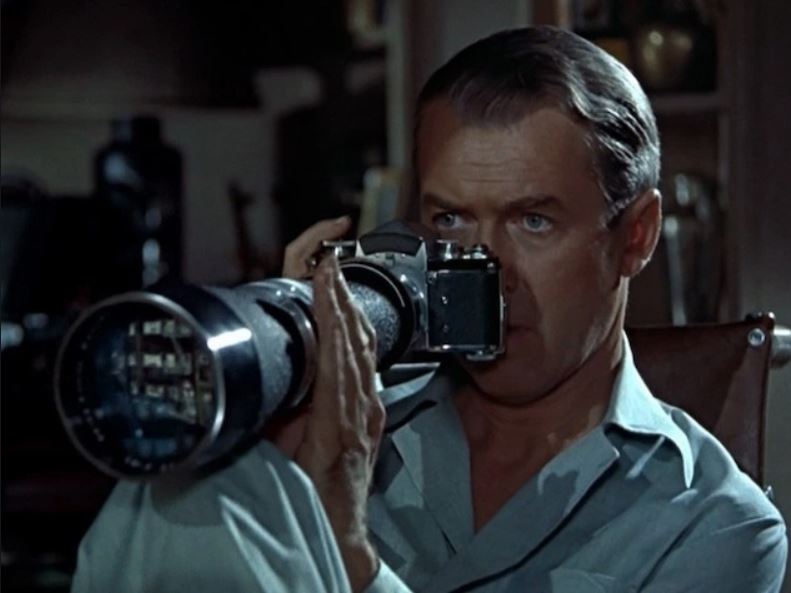
In the Hitchcock movie “rear window” James Stewart’s character modelled on the real-world photographer Robert Capa, touches on the ethics of photography and the voyeuristic nature that it can have. It could be argued that it is this very aspect that gives some the creepy or seedy view that some see photographers. He decides rightly or wrongly that it’s ok as others could be doing it to him as he undertakes his life. Which makes me think of the phrase “don’t get caught with your pants down” someone will photograph it. Throughout the film there are strong references to the glamours that one expects of the travel photographer and the excitement of news assignments, building on the possible amazing career that this could be.
Maybe the glamour that is perceived with the fashion or travel photographer that is so abundant on Instagram is where the aspirations of many arise from. Are we seeing travel photographers or fashion photographers? I don’t believe we are. It’s simply content from around the world posted by many users sensationalising the wonders of the world.
This user-generated content means everyone is a photographer. With the decline in the sales of cameras, one could think that was somewhat a strange statement. It is with the advent of mobile phones, that we all now carry a camera in our pockets and take pictures of everything and anything.
The camera sales over the years have always led the development of more new features on the camera, higher picture quality and this brings back the need to market to the masses. I feel that this position has helped the industry, but holds people back in developing their skills as they have the excuse “it’s not the latest model” mentality.
For myself, if it works and takes a picture then any failing will be down to my failure, not the cameras. This position has allowed me to move away from being a consumer to that of a user. We are currently at the start of the next technology revolution with the move to mirrorless. How many people have sold up and moved over? A lot. These consumers have succumbed to the power of the advertising, their pictures must be better this week although I am sure that the top end DSLR they had last weeks pictures looked just the same. I would always embrace a technology change and advance if it solves a problem I am having.
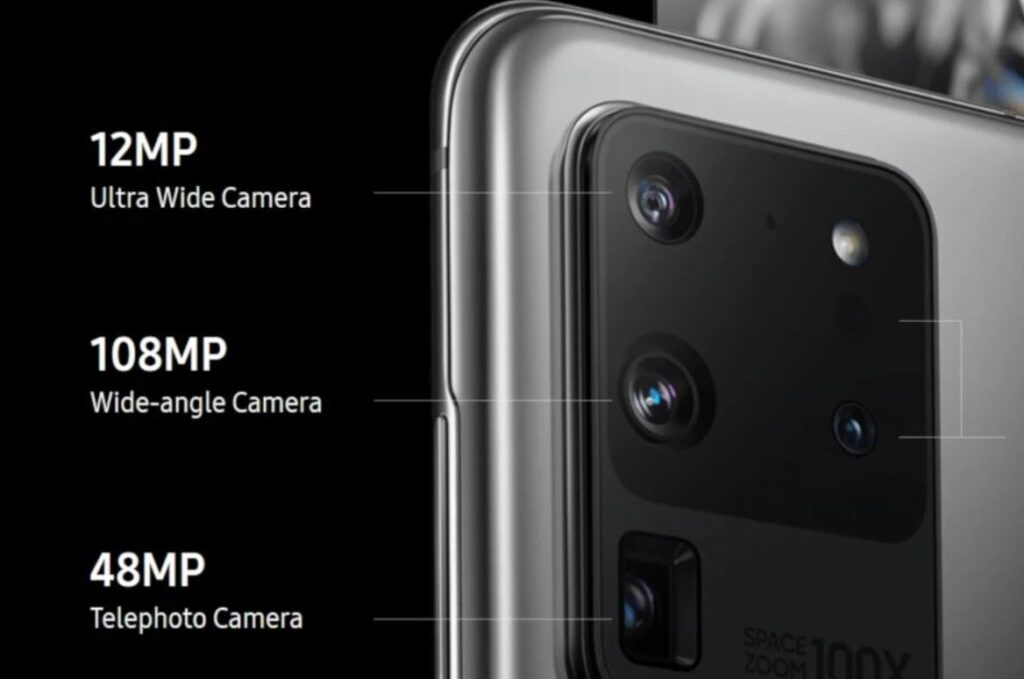
The marketing and presentation of cameras can lead to a problem with the perception of a professional photographer. How do consumers compare products? The simple use of numbers is the answer. Technology is often presented in advertising with numbers that are meaningless. I only have 24MP in my DSLR and because of this simple number comparison, it makes people believe their phone is better than a professional photographer. To overcome this blinkered perception it’s my skill as the photographer that will beat their megapixels. Always avoid what’s in your bag conversations.
Now everyone has a camera with them, it has given rise to an explosion of readily available content for the news channels. The media absorbs this content as fast as it is produced. Looking back to Nightcrawler, are we all now the unwelcome and detested news photographer? No, these people are consuming events first-hand through the luck of being there often removing themselves from the event by watching it on the phone. This leads to images of poor quality that is becoming more and more accepted in the race for content. The professional will never be able to be at the scene as it starts to happen unless they become “Nightcrawler” and help the story.
I have no way of judging how others would perceive me in the role of photographer. Rather I feel that perceptions of me will vary on previous encounters with other photographers or preconceived ideas should I label my photography. I just feel that best practice always will put me in good stead.
References
Fig 1: Originally released by Paramount Pictures 1954
Fig2: Found online and viewed 10/10/2020 https://www.phonearena.com/news/first-television-commercial-for-the-galaxy-s-20-ultra-5g_id122183
2: Henri Cartier-Bresson “American Photo”, September/October 1997, page: 76
The post Week Three: Rethinking Photographers appeared first on MA Photographic Journey.
]]>The post Week Two: Varying media & Interdisciplinary Practices appeared first on MA Photographic Journey.
]]>I find myself in a strange position this week. Friday arrived, a new week starting yet now I have realised that I have not finalised week two although I have already done many hours on week three so have to clear the mind to look back to what was only a few days ago, so different in many respects to last week.
Varying media & Interdisciplinary Practices is a great opener to look at how photography is used and disseminated between different practices while still looking at similarities of how photography is used in other practices.
Photography and its now distant cousin film have coexisted for many years now and each can use aspects from the other to convey the message. The long still motionless gaze in a film portraying the mesmerising heat between two individuals or the look of stunned emotion after an event bringing the photography to film. Or the aspect of trying to bring a motion to a static image, trying to impart time and motion and not be a fragment of history.
I know that I am not here doing videography, so no direct study of cinema, however by understanding the disciplines that have come before us both in cinema and photography we may incorporate these into our own practice. In modern times we do not have to be studying videography or cinema to not be exposed to it every day.
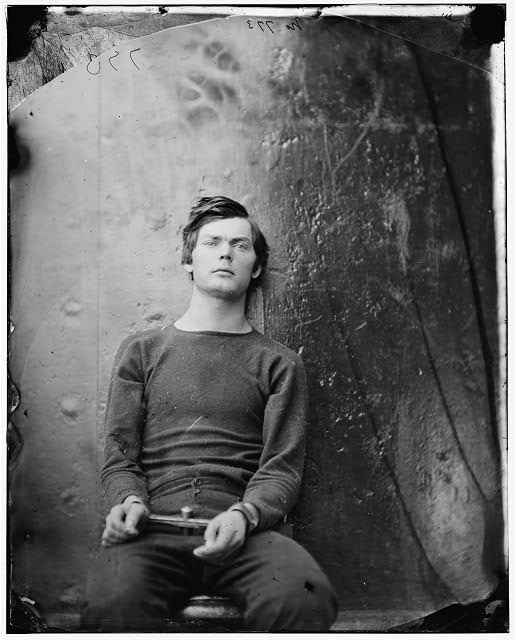
Creator(s): Gardner, Alexander, 1821-1882, photographer
Date Created/Published: [1865 April] https://www.loc.gov/pictures/item/2018667106/
Roland Bathes in Camera Lucida goes into the explanation of what “makes” a photograph with a definition of two parts. The “Punctum” and the “Studium”. Each and every picture can be viewed in this way and it is a personal view when it comes to the punctum as this is the subjective view the individual may have or take away. By contrast, the Studium is based on the description of what the image is. The image he uses in his discussion is the one above of Lewis Payne taken by Alexander Gardner in 1865. Bathes describes the punctum as his realisation that Lewis Payne is going to die.
The same image has been discussed by others and on such example is about the realism the photograph has, “We also have a photograph that contains just the right mix of elements to make it look real, to make it feel almost contemporary.” explains Joerg Colberg . This realism ties into the more modern position that we no longer trust images due to how many are “faked”

Alphonse Bertillon never classed as a photographer used photography to develop a pre-fingerprint system. Utilising the medium as a tool taking images. Bringing into our experience the questionable sciences contained within Eugenics. With these practises it’s the viewing of the image that has the meaning or delivers the proof of suspect theories. If the image is repurposed and viewed again its position and discipline could change. This makes me think about the practice of image-making and how further enable them to be used. We are always taking pictures of objects/things/events or places to name but a few and how these actions can fall into other disciplines within photography.
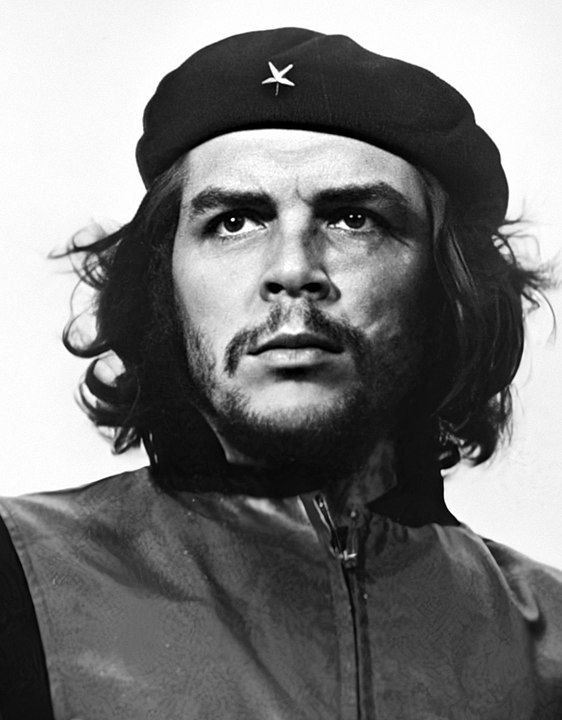
An example showing images being repurposed. This image from March 1960, a news image of the day and through time has been viewed in other ways and now resides on t-shirts, album covers and posters. I feel that with each production it is being seen differently and many consumers in the current day may not even know who or what he stood for.
This week lead me to look further within my own practice. The production of four landscape images that are removed from the referent but stand as images in their own right. I feel that with the study of the interdisciplinary nature of photography can give a disconnect from your own practice to allow exploration to change and produce further work which you would not produce if you stay narrowly focused.
References
Roland Bathes, Camera Lucida,
https://www.loc.gov/pictures/item/2018667106/
The post Week Two: Varying media & Interdisciplinary Practices appeared first on MA Photographic Journey.
]]>The post Week One: Looking Back appeared first on MA Photographic Journey.
]]>The first week is over or is it? Well, week two has started but I feel that week one is still needing more work to get the most from it. Playing catch up, with a late enrolment seemed to create a mountain of work, setting up this CRJ, reading all the orientation material. Oh and not forgetting the first webinar that I missed along with all the work needed for that.
My feelings that the opening topic “The Global Image” as a concept, could start as a simplistic way of covering the history of photography showing that even in the early days it was a global phenomenon. That was challenged, and could not be left there. Looking deeper more aspects start to become evident that the topic has so many other facets or layers. Others within the group have differing first thoughts, all valid as a simple answer to the global image discussion, however, these can only be a starting point as the whole debate far greater.
The opening of the forum activity with peers providing images, which range vastly in style and content I felt was successful even though very daunting at the time. Having to post with no sight of what was expected or what others would deliver. On examination of the results, after posting my work it was visible within our peer group that Marvin Heifermans observation is inherently true “each person in the room, because of his or her training, responsibilities, or interests, used and spoke about photography differently.”1 Leading to the conclusion that there may never be a “right” conclusion to the debate, however moving from my initial starting point I have a lot more vision about the need to get above the noise.
I think the weight of images being produced creates the noise. Various online sources seem to indicate that Facebook alone has over 350 million images uploaded per day. From the simple cell-phone selfie for social media through to gripping images, we can’t see them all, this means that to find the audience we have to know where to find them as the chance of them finding us is small.
To look at my practice I can see that I am local in a global world and need to raise my profile with improvements. With ideas revolving around in my mind as to what can be applied from this work and the application of this in my practice I can see that it’s important to have a grip on what photography means so that one can focus effort to produce the right image and place it in the right location.
Feeling more relieved now, having spent the weekend and a few late nights catching up I am ready to face week two. The Journey Continues.
1 Photography changes everything (Introduction) Heiferman, Marvin. Aperture
The post Week One: Looking Back appeared first on MA Photographic Journey.
]]>The post Starting the Critical Research Journal appeared first on MA Photographic Journey.
]]>“Create using WordPress a site to become your Critical Research Journal to document your work and progress through the Journey while studying for the MA in Photography. “
This journey has started, September 2020 and on the first day I have no idea where it will go and right now I am not even sure where I am.
The post Starting the Critical Research Journal appeared first on MA Photographic Journey.
]]>